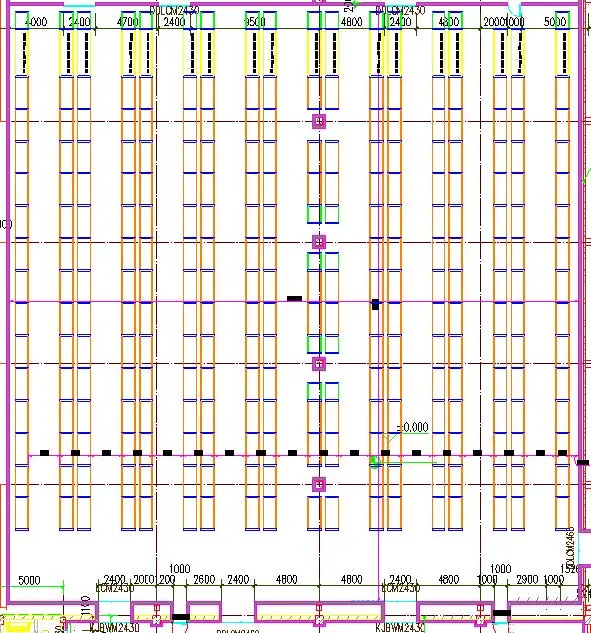


A VNA warehouse solution is designed to maximize storage capacity by reducing aisle width and making better use of vertical warehouse height. By combining very narrow aisle racking with suitable VNA forklifts or articulated forklifts, this solution helps warehouses store more pallets within the same floor area while keeping each pallet position directly accessible.
A VNA, or Very Narrow Aisle, warehouse solution uses narrow aisles and high-bay pallet racking to increase warehouse storage density. Compared with standard selective pallet racking, VNA systems reduce aisle space and allow more rack rows to be installed in the same building.
This solution is suitable for warehouses that need both high storage capacity and direct access to every pallet. It is commonly used in high-bay warehouses, distribution centers, manufacturing warehouses, cold storage facilities and industrial storage operations.
A successful VNA warehouse is not only about choosing narrow racking. The rack layout, forklift type, aisle width, floor flatness, guidance system, pallet size, load weight and lift height must all be planned together.
Key Points
Very narrow aisle layout
High-bay pallet storage
100% direct pallet access
Better use of warehouse floor space
Requires suitable VNA forklift or articulated forklift
Needs proper floor and aisle planning
Key Benefits
Narrow Aisle Design
VNA warehouse systems reduce aisle width compared with standard forklift aisles. This allows more rack rows to fit into the same warehouse area, helping increase pallet capacity without expanding the building.
High-Bay Storage
VNA racking can make better use of vertical warehouse space. When matched with the right forklift and building height, the system can support higher rack levels and improve total storage capacity.

Direct Pallet Access
Unlike many dense storage systems, VNA racking can still provide direct access to every pallet position. This makes it suitable for warehouses with many SKUs, mixed inventory and frequent pallet picking requirements.

Better Vertical Space Use
For warehouses with limited floor area but sufficient clear height, VNA is a practical way to increase storage capacity. It improves space utilization by combining narrow aisles with high rack structures.
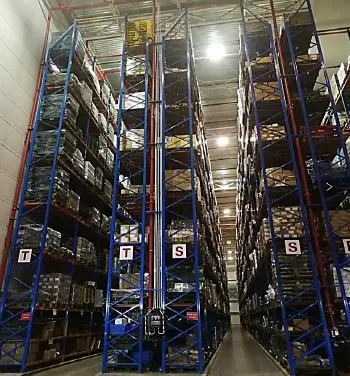
Typical Layout / Working Principle
Rack rows are arranged with very narrow working aisles.
VNA forklifts or articulated forklifts travel inside the aisles.
Pallets can be stored and retrieved directly from each rack position.
Warehouse height is used more efficiently through high-bay racking.
Floor flatness, aisle accuracy and forklift matching are critical for stable operation.
Planning Highlights
Anchura del pasillo
VNA aisle width is much narrower than standard forklift aisles. The required aisle width depends on the forklift type, pallet size, load weight, rack height and guidance method. Accurate aisle planning is essential for safe and efficient operation.

Floor Flatness
Floor condition is one of the most important factors in VNA warehouse planning. Higher lift heights require better floor flatness and levelness to reduce truck sway and improve handling accuracy.

Guidance System
Depending on the forklift type and operating requirement, a VNA warehouse may use rail guidance, wire guidance, magnetic guidance or visual aisle control. The guidance method should be selected based on safety, speed, budget and operating habits.

Rack Height
Rack height should be matched with warehouse clear height, forklift lifting capacity, pallet weight and safety clearance. Higher racking can improve storage capacity, but it also requires stricter equipment and floor conditions.

Pallet Dimensions
Pallet size and load shape determine rack depth, beam length, clearance and aisle design. The actual pallet size, cargo overhang and load stability should be confirmed before finalizing the VNA layout.

Pros and Cons
Pros
Cons
Mayor densidad de almacenamiento que las estanterías selectivas estándar
100% direct access to every pallet position
Better use of warehouse height
Suitable for many SKUs and mixed inventory
Reduces building footprint requirements
Good option for high-bay storage
Improves space utilization without moving to deep storage
Suitable for warehouses that need both density and accessibility
Higher initial investment than standard racking systems
Requires specialized VNA or articulated forklifts
Floor flatness requirements are stricter
Aisle design must be very accurate
Operation depends heavily on suitable forklift selection
Less flexible if future forklift type changes
May require guidance systems for safer high-level operation
Best-Fit Applications
Centros de distribución
VNA warehouse solutions are suitable for distribution centers that need high pallet capacity and direct access to many SKUs. The layout supports efficient pallet storage, picking and replenishment.

Manufacturing Warehouses
Manufacturing facilities can use VNA systems for raw materials, components, semi-finished goods and finished product storage. It helps increase storage capacity near production or dispatch areas.
High-Bay Storage
For warehouses with sufficient clear height, VNA systems are a strong option for maximizing vertical storage. High-bay racking can significantly increase pallet positions without requiring more floor space.

Almacenamiento en frío
Cold storage buildings are expensive to build and operate, so space utilization is especially important. VNA solutions can help increase pallet capacity while maintaining direct pallet access in frozen or chilled environments.
Related Equipment
Articulated VNA Forklift
Articulated VNA forklifts are designed for narrow aisle pallet handling. Their turning mast or articulated structure allows them to operate in narrow aisles while still handling pallets directly from the rack.

Man-Up / Man-Down VNA Forklift
Man-up and man-down VNA forklifts are suitable for high-bay narrow aisle operations. They can be selected according to picking requirements, lift height, pallet weight and warehouse workflow.
The required aisle width depends on forklift type, pallet size, load weight and rack height. VNA systems usually require much narrower aisles than standard reach truck or counterbalanced forklift layouts.
A VNA warehouse usually uses articulated forklifts, man-up VNA trucks or man-down VNA forklifts. The best option depends on lift height, pallet weight, aisle width, picking method and operating frequency.
The rack height depends on warehouse clear height, forklift lifting capacity, load weight, floor condition and local safety requirements. Higher VNA systems need more careful checking of floor flatness, stability and residual forklift capacity.
VNA systems are suitable for many palletized products, especially where direct pallet access and high storage density are both required. However, the system may not be the best choice for very low-SKU bulk storage, unstable loads or operations that require very fast deep-lane throughput.
Yes. Floor flatness is important for VNA operation, especially when lifting to higher levels. Poor floor conditions can affect forklift stability, travel accuracy and operator confidence.
Ready to Implement a VNA Warehouse Solution?
A VNA warehouse solution is a practical choice when your operation needs more pallet capacity, narrow aisle storage and direct pallet access within limited floor space.
Share your warehouse size, clear height, pallet dimensions, load weight, aisle requirement and daily handling frequency with Akuros. Our team can help you evaluate whether a VNA warehouse solution is suitable for your storage layout, forklift selection and long-term operation.
Envíe sus necesidades personalizadas
Obtenga un presupuesto gratuito
Póngase en contacto con nosotros para obtener presupuestos gratuitos y conocimientos más profesionales sobre el producto. Le prepararemos una solución profesional.