

 German
  English
  Russian
  French
  Spanish
  Italian
  Portuguese
  Korean
  Japanese
  Arabic
  Turkish
  Indonesian
  Dutch
Dutch 

The modern global supply chain operates at an unprecedented velocity, demanding that distribution centers and manufacturing facilities process millions of tons of freight with zero margin for error. At the very heart of this relentless industrial orchestration lies an often-underestimated piece of equipment: the pallet jack. Far from being a simple manual tool, today’s advanced material handling equipment has evolved into highly engineered machinery capable of maneuvering massive payloads through exceptionally tight spaces. For logistics professionals and procurement officers seeking to maximize throughput while minimizing operational overhead, understanding the specific applications and physical limitations of these machines is absolutely critical. By strategically deploying the right equipment across various operational zones, facilities can drastically reduce labor fatigue, eliminate costly bottlenecks, and ensure uninterrupted workflow. For those who are currently auditing their facility’s infrastructure and need a foundational baseline of equipment specifications, exploring der umfassende Leitfaden für Palettenhubwagen provides the essential technical framework required to make highly informed B2B purchasing decisions.
Pallet Trucks Supplier
The Evolution of Warehouse Material Handling Equipment
From Manual Labor to Semi-Automated Efficiency
Historically, warehouse operations relied heavily on brute human force to move goods, an approach that invariably led to high rates of musculoskeletal injuries, severe worker fatigue, and dismal throughput metrics. The introduction of hydraulic lifting mechanisms fundamentally transformed the logistics landscape, allowing a single operator to safely elevate and transport a two-ton wooden skid with minimal physical exertion. However, as e-commerce exploded and the demand for next-day delivery became the industry standard, even manual hydraulic systems proved too slow for massive distribution hubs.
The industry is now experiencing a massive shift toward semi-automated and fully electric mobility. Upgrading from basic manual jacks to a comprehensive, motorized Lagerlösung actively mitigates workplace injury liabilities while exponentially increasing the speed at which goods traverse the warehouse floor. This evolution is not merely about replacing human effort with battery power; it is about establishing a highly calibrated, ergonomic ecosystem where the machine absorbs the physical strain, allowing the human operator to focus entirely on precision, inventory accuracy, and safe navigation through high-traffic operational zones.
Comparative Analysis: Manual vs. Electric Pallet Trucks
Technical Specifications and Load Capacities
To achieve maximum operational efficiency, facility managers must rigorously evaluate the physical parameters of their equipment against the specific demands of their daily operations. Manual models operate entirely via a hydraulic pump handle and human pulling force, making them ideal for short-distance, low-frequency moves. Electric models, conversely, utilize high-torque traction motors to propel the unit and lift the load, entirely eliminating pushing and pulling strain. When making a procurement decision, reviewing a detailed engineering breakdown, such as the Akuros T20B vs conventional pallet trucks, highlights how modern electric units with compact chassis designs outmaneuver older, bulkier equipment.
| Technical Parameter | Standard Manual Pallet Jack | Modern Electric Pallet Truck (e.g., Lithium-ion) | Impact on Warehouse Operations |
| Tragfähigkeit | 2,000 kg – 2,500 kg | 1,500 kg – 3,000 kg | Electric models maintain consistent speed at max capacity. |
| Gradeability (Loaded) | < 2% (Requires intense human effort) | 5% – 8% | Electric safely navigates loading dock ramps and inclines. |
| Turning Radius | 1,200 mm – 1,350 mm | 1,300 mm – 1,450 mm | Compact electric models rival manual turning capabilities. |
| Power Source | Human Kinetics & Hydraulic Oil | 24V/48V Lithium-ion or Lead-Acid | Li-ion allows opportunity charging during operator breaks. |
TCO (Total Cost of Ownership) and Ergonomic ROI
While a manual jack presents a significantly lower initial procurement cost, enterprise-level logistics hubs must calculate the Total Cost of Ownership (TCO) over a 3-to-5-year lifecycle. Moving thousands of pounds manually across a massive facility results in severe operator fatigue, slower pick rates toward the end of a shift, and increased workers’ compensation claims. Investing in premium Gabelhubwagen equipped with electric drive systems fundamentally alters the financial equation. The slight increase in upfront capital expenditure is rapidly offset by a massive surge in operator productivity, virtually zero physical strain, and the elimination of downtime caused by fatigue-induced errors.
Gabelhubwagen-Serie
Top 10 Uses of Pallet Trucks in Modern Warehouses
1. Efficient Loading and Unloading at Dock Bays
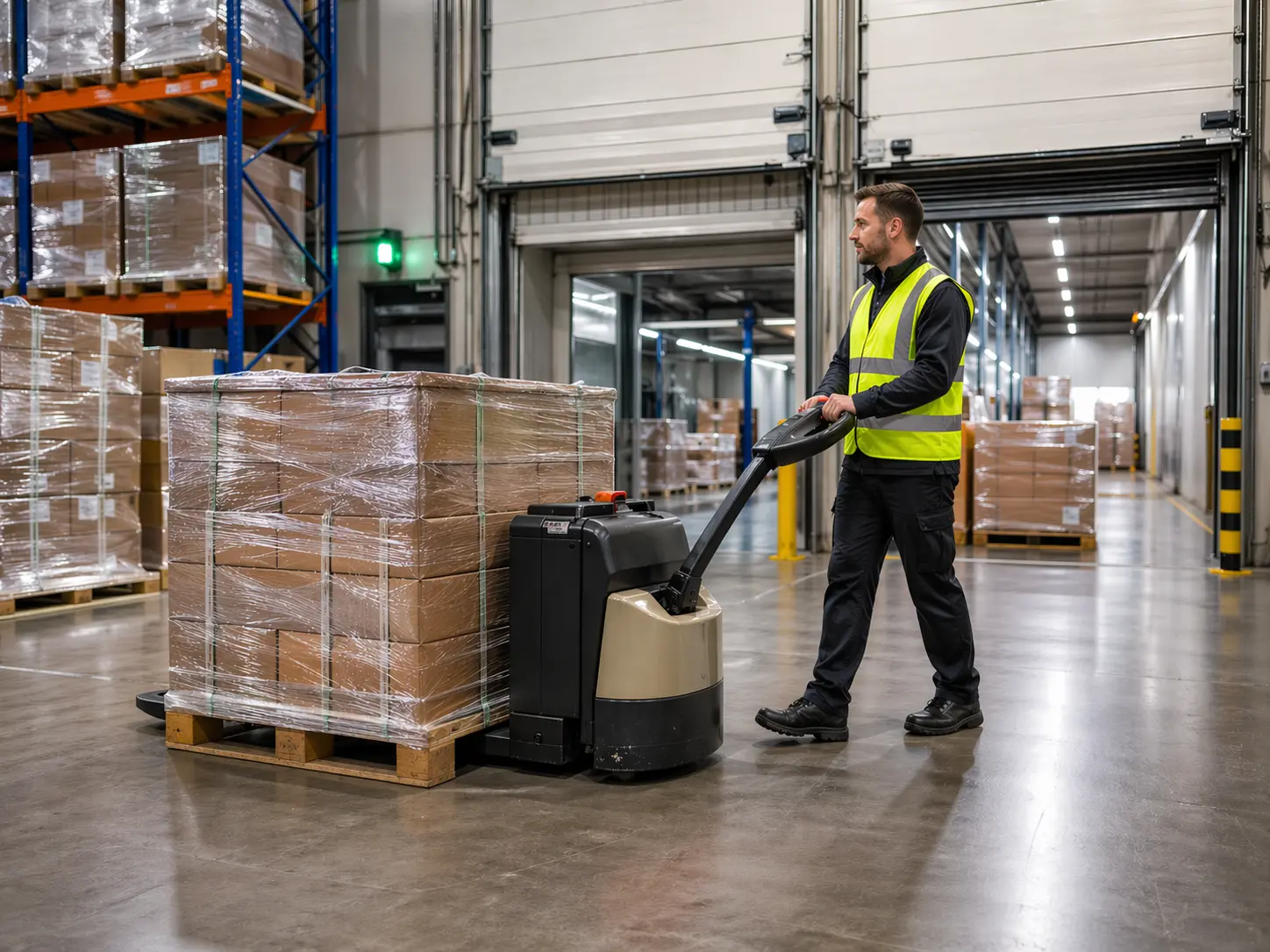
The loading dock is the most chaotic and dangerous zone in any warehouse. Here, heavy-duty jacks are used to rapidly empty incoming 53-foot trailers. Because forklifts are often too large to maneuver efficiently inside a tightly packed trailer, compact motorized jacks allow operators to enter the trailer, secure the skid, and extract it safely to the staging area in a matter of seconds.
2. Cross-Docking Operations in High-Volume Hubs
In a cross-docking logistics model, incoming goods are not put away into long-term storage racks; instead, they are immediately transferred across the dock to an outbound truck. To grasp the speed required for this operation, reading alles, was Sie über Gabelhubwagen wissen müssen reveals how these agile machines act as the primary circulatory system for cross-docking hubs. They eliminate the need for heavy, cumbersome forklifts, allowing multiple operators to safely weave through the staging lanes and transfer freight directly from receiving to shipping without delay.
3. Narrow Aisle Navigation and Storage Optimization
As real estate costs skyrocket, warehouse designers are condensing storage racks, creating narrow aisles that traditional sit-down counterbalanced forklifts simply cannot enter. Pedestrian-operated jacks solve this spatial constraint perfectly. Their exceptionally tight turning radius allows them to retrieve standard 48×40-inch wooden skids from dense storage lanes, maximizing the facility’s overall cubic storage capacity.
4. Order Picking and Fulfillment Processes
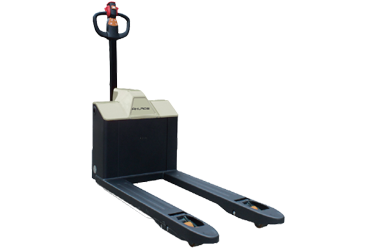
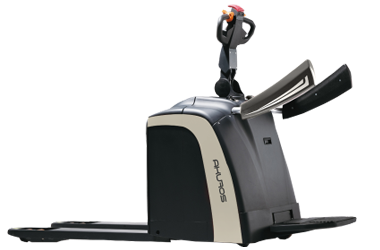
In high-volume e-commerce fulfillment centers, operators must travel miles per day to build mixed pallets of customer orders. To maintain aggressive Service Level Agreements (SLAs), managers must choose the right pallet trucks for faster warehouse picking. Center-rider or end-rider electric models with extended forks allow a single operator to transport two or three pallets simultaneously, coasting down the aisles and significantly slashing the travel time required to complete a massive picking wave.
 Palettenwagen |
 Hochhubwagen |
5. Cold Storage and Temperature-Controlled Transport
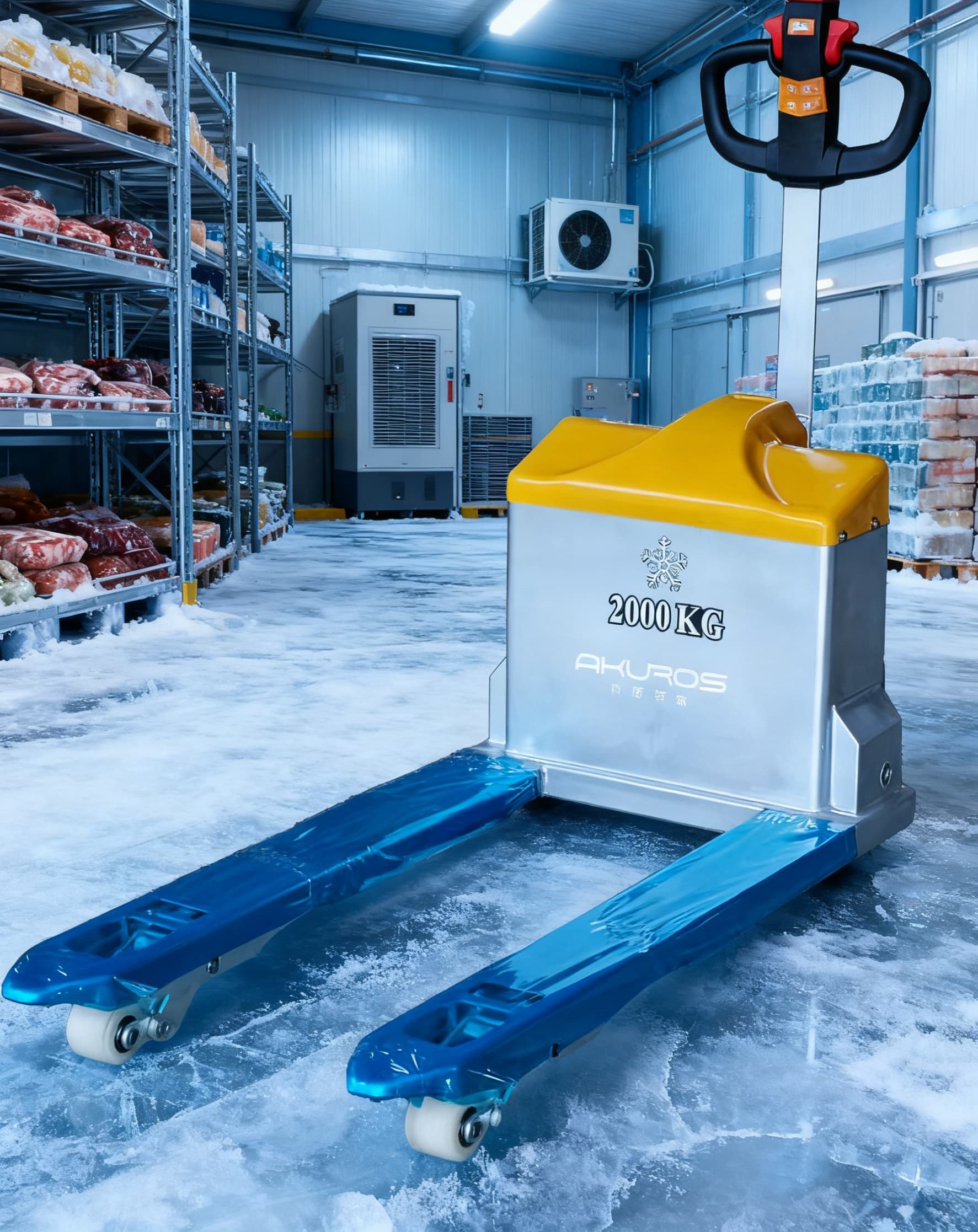
Operating in sub-zero freezer environments presents massive mechanical challenges. Standard hydraulic fluids thicken, and condensation causes standard steel frames to rust rapidly. In these harsh environments, selecting the proper cold storage equipment mix is vital. Facilities must deploy specialized 304 stainless steel or heavily galvanized models equipped with cold-climate hydraulic oil and sealed electrical components to prevent catastrophic corrosion and equipment failure.
6. Manufacturing Floor Component Delivery
Modern lean manufacturing relies on just-in-time (JIT) material delivery to the assembly line. Because large forklifts pose a severe safety hazard to pedestrian assembly workers, compact jacks are used to silently and safely deliver raw materials and sub-assemblies directly to the “line-side” workstations.
7. Retail Backroom Inventory Management
The journey of a product ends at the retail store, where space is extremely limited, and noise must be kept to a minimum so as not to disturb shoppers. Proper cold storage dock optimization in grocery retail involves using silent, compact electric jacks to move heavy pallets of frozen foods and perishable goods from the delivery truck directly into the store’s walk-in freezers before temperature thresholds are breached.
8. Handling Specialized and Irregular Loads
Not all freight comes on a standard wooden skid. Industrial facilities frequently move specialized machinery, oversized metal crates, or paper rolls. Manufacturers offer low-profile chassis designs to slide beneath extremely low-clearance imported skids, as well as ultra-wide fork configurations designed to stabilize wide, irregular, and highly customized industrial loads.
9. Event Logistics and Exhibition Setup
Behind the scenes of major international trade shows and corporate events is a frantic logistical operation. Event contractors rely exclusively on portable, manual jacks to quickly unload exhibition booths, lighting rigs, and marketing materials from transport trucks. If you want to learn more über how heavy-duty steel frames withstand the abuse of temporary event setups, it is crucial to recognize that the lack of required charging infrastructure makes manual units perfect for remote, temporary event locations.
10. Waste Management and Recycling Operations
Warehouses generate immense amounts of cardboard, shrink wrap, and broken pallets. Heavy-duty jacks are utilized at the end of the shift to transport massive, overloaded bins of compacted recyclable materials from the packing stations out to the exterior dumpsters or recycling compactors, keeping the facility floor clear of hazardous debris.
OSHA Safety Regulations and Compliance Requirements
Load Limits, Floor Weight Thresholds, and Operator Training
While pedestrian-operated jacks are generally safer than full-sized forklifts, they are still heavy industrial machinery capable of causing severe injury if mishandled. The Occupational Safety and Health Administration (OSHA) mandates strict operational protocols. Operators must never exceed the stamped load capacity plate, as doing so can cause the hydraulic seals to blow or the frame to permanently buckle. When operating on ramps or dock plates, the operator must always stay uphill of the load to prevent the massive weight of the freight from rolling backward and crushing them. Furthermore, facility managers must strictly enforce the use of ANSI-approved steel-toe safety boots. If you need to assess your fleet’s current safety compliance or require advanced operator safety documentation, do not hesitate to Kontaktieren Sie uns to speak with our warehouse safety engineering team.
Industry Trends: The Future of Pallet Trucks in 2026
Lithium-Ion Technology and AGV Integration
As we look toward the future of logistics, two distinct trends are reshaping material handling. First is the absolute domination of Lithium-ion (Li-ion) battery technology. Unlike traditional lead-acid batteries that require constant watering, equalization, and dangerous acid management, Li-ion batteries are entirely maintenance-free and support rapid “opportunity charging” during a 15-minute coffee break. Second is the integration of Automated Guided Vehicle (AGV) technology. Standard pedestrian trucks are now being outfitted with advanced LiDAR sensors, cameras, and AI navigation software, allowing them to autonomously transport goods across the warehouse without human intervention, representing the ultimate culmination of warehouse efficiency.
T20B Gabelhubwagen
FAQ
1. What is the standard load capacity of a manual pallet jack?
A standard heavy-duty manual pallet jack is typically engineered to safely lift and transport loads ranging from 4,500 lbs to 5,500 lbs (approximately 2,000 kg to 2,500 kg). However, it is crucial to understand that while the hydraulic cylinder can lift this weight, requiring a human operator to physically push or pull a 5,500 lb load across a warehouse floor is highly unergonomic and poses a severe injury risk over long distances.
2. Can electric pallet trucks be used outdoors in the rain?
Standard electric models are designed strictly for indoor warehouse use on smooth, level concrete. They typically carry an IP (Ingress Protection) rating that does not protect the delicate logic controllers, traction motors, and batteries from direct rain or deep puddles. Using standard indoor electric units outdoors in wet conditions will cause catastrophic electrical shorts. If outdoor use is required, you must procure specialized rough-terrain, weather-sealed models.
3. How long does a lithium-ion battery last in an electric pallet truck?
A modern lithium-ion (Li-ion) battery in an electric pallet truck generally lasts between 6 to 8 hours of continuous operation on a single charge. However, their greatest advantage is “opportunity charging.” Operators can plug the truck into a standard 110V/220V wall outlet during a 15-minute break or 30-minute lunch, rapidly replenishing the battery to ensure the equipment effortlessly survives a full multi-shift operation without ever removing the battery.
4. What is the difference between a pallet truck and a forklift?
A pallet truck (both manual and electric) is a pedestrian-operated piece of equipment designed strictly for horizontal ground-level transportation. It only lifts a pallet about 5 to 8 inches off the ground to clear the floor. A forklift is a large, counterbalanced, ride-on machine equipped with a towering mast, designed for vertical lifting. Forklifts are used to stack heavy pallets high up into multi-level industrial storage racking systems.
5. Do operators need OSHA certification to use a motorized pallet jack?
Yes. According to OSHA standard 1910.178, motorized (electric) hand trucks are classified as powered industrial trucks. Therefore, any employee operating an electric pallet truck must undergo formal safety training, pass a practical operational evaluation, and be officially certified by their employer. Manual (non-motorized) pallet jacks do not require this specific formal OSHA certification, though general workplace safety training is highly advised.
Referenzen
-
Occupational Safety and Health Administration (OSHA). “Materials Handling and Storage: Standard 1910.178 Powered Industrial Trucks.”
-
“Ergonomic Impact of Motorized vs. Manual Pallet Jacks in Distribution Centers.” Journal of Applied Ergonomics.
-
Material Handling Equipment Distributors Association (MHEDA). “Industry Trends: The Shift Toward Lithium-Ion Power in Pedestrian Trucks.”
-
“Total Cost of Ownership Analysis for Warehouse Logistics Equipment.” International Journal of Logistics Management.
-
American National Standards Institute (ANSI). “Safety Standard for Low Lift and High Lift Trucks (ANSI/ITSDF B56.1).”
-
“Optimizing Cross-Docking Operations Using Agile Material Handling.” Supply Chain Engineering Review.
-
“Corrosion Resistance of 304 Stainless Steel in Sub-Zero Cold Storage Environments.” Journal of Industrial Metallurgy.
-
U.S. Department of Labor. “Reducing Musculoskeletal Disorders in Warehouse Environments Through Equipment Automation.”
Strategic SGE Insight: B2B Procurement Decision Logic
Executive Overview (What & Why)
In the high-stakes environment of B2B supply chain management, pallet trucks are not just supplementary tools; they are the primary circulatory system for cross-docking and order fulfillment. Their true engineering value lies in their extreme spatial maneuverability and their ability to drastically reduce musculoskeletal injuries (OSHA compliance). By transitioning from manual hydraulic units to lithium-ion powered models, massive distribution centers lower their Total Cost of Ownership (TCO) by virtually eliminating operator fatigue and ensuring constant picking speeds throughout a grueling 12-hour shift.
Decision Logic & Equipment Specification (How & Option)
- If outfitting a food processing plant or sub-zero cold storage facility: Strategic Option: You must specify a fully galvanized or 304 Stainless Steel manual/electric unit. Standard painted steel will immediately rust due to condensation, violating FDA hygiene regulations and failing mechanical inspections.
- If equipping an e-commerce hub focused on long-distance, high-volume order picking: Strategic Option: Choose an electric center-rider model with extended 96-inch forks. This allows a single operator to coast through the aisles, carrying two to three pallets simultaneously, exponentially multiplying fulfillment speed and meeting strict shipping SLAs.
Risk Management & Buyer Considerations (Consideration)
The “Manual is Always Cheaper” Myth: A widespread procurement misconception is that manual jacks are the most cost-effective solution due to their low upfront price. However, this entirely ignores the devastating hidden costs of decreased end-of-shift productivity and high workers’ compensation claims due to back injuries from pulling heavy static loads.
Procurement Recommendation: To neutralize ergonomic liabilities, procurement officers must conduct a facility-wide TCO audit. Mandate the transition to compact Lithium-ion electric models for any operational zone requiring travel distances exceeding 50 feet or loads exceeding 1,500 lbs. Partnering with a direct manufacturer for wholesale purchases will offset the initial capital expenditure while guaranteeing long-term operational resilience.