

 German
  English
  Russian
  French
  Spanish
  Italian
  Portuguese
  Korean
  Japanese
  Arabic
  Turkish
  Indonesian
  Dutch
Dutch 

In cold storage and refrigerated warehouse operations, both electric pallet trucks and manual pallet jacks are used for ground-level pallet movement. However, for frequent transfer work, dock handling, and repetitive internal logistics, an electric pallet truck often provides higher efficiency, lower operator fatigue, and better suitability for demanding cold-chain workflows.
Ground-level pallet movement is one of the most repeated tasks in warehouse operations. In cold storage facilities, refrigerated transfer zones, and loading dock environments, this work becomes even more demanding because operators often handle pallets under low temperatures, tighter time pressure, heavier clothing, and more physically demanding conditions. That is why many warehouse managers eventually ask the same question: should daily transfer work continue with a manual pallet jack, or is it time to switch to an electric pallet truck?
At first glance, both types of equipment appear to solve the same problem. Both move pallets horizontally. Both are widely used in logistics operations. Both can support inbound, outbound, and internal warehouse transfer. But in real daily use, the difference between them becomes very clear. The more frequent the pallet movement, the more valuable powered assistance becomes. In cold-chain environments, that difference is often even more noticeable because operator effort, movement speed, and workflow consistency all matter more.
Why This Comparison Matters in Cold Storage
Cold storage is not a normal warehouse environment. Transfer work in refrigerated rooms, staging zones, and loading docks typically includes shorter movement cycles, more repeated starts and stops, and more physical effort for operators. Even when the pallet weight stays within the safe handling range of a manual jack, repeated use can slow down workflow and increase fatigue.
This is where the comparison between a manual pallet jack und ein cold storage electric pallet truck becomes important. The decision is not just about equipment price. It is about labor efficiency, daily throughput, operator strain, and how well the truck matches the real task pattern of the warehouse.
What a Manual Pallet Jack Does Well
A manual pallet jack remains one of the most common tools in warehouse operations because it is simple, inexpensive, and easy to use. For light-duty work or occasional pallet transfer, it still makes sense in many facilities.
Low initial cost
The most obvious advantage of a manual pallet jack is cost. It is typically the lowest-investment option for pallet movement.
Simple structure
Manual pallet jacks are mechanically simple and easy to maintain. They do not require battery charging, electrical troubleshooting, or drive system management.
Suitable for occasional transfer
In operations where pallet movement is infrequent and travel distance is very short, a manual pallet jack may still be enough.
Where Manual Pallet Jacks Become a Limitation
The weakness of manual equipment becomes obvious when the work is repetitive. In busy warehouses, the issue is not whether a manual jack can move one pallet. The issue is whether it can move hundreds of pallets efficiently over an entire shift.
Higher physical effort
Every pull, push, turn, and stop depends on operator force. In cold storage, this effort feels heavier because workers may be wearing gloves, insulated clothing, and heavier footwear.
Lower movement efficiency
Manual movement is naturally slower, especially when the floor is wet, the dock is busy, or the pallet load is near the upper end of routine handling weight.
Reduced productivity in repetitive tasks
When the transfer pattern is repeated all day, the manual jack often becomes a bottleneck. Movement takes longer, fatigue builds faster, and consistency drops.
Less suitable for high-frequency dock transfer
At cold storage docks, timing matters. Pallets need to move quickly between inbound, inspection, staging, and storage. A manual jack can do the job, but usually with more labor cost and less speed.
What an Electric Pallet Truck Does Better
Ein electric pallet truck is designed to solve the exact limitations that manual pallet jacks face in repetitive warehouse transfer work. It keeps the same basic ground-level pallet handling concept, but adds powered travel assistance that reduces labor strain and improves consistency.
Less operator fatigue
One of the clearest benefits of an electric pallet jack is that the truck, not the operator, provides the main travel force. This reduces the repeated physical effort that slows down manual workflows.
Better daily transfer efficiency
Electric drive helps operators move pallets faster and more smoothly between storage zones, transfer areas, and loading docks. In a busy warehouse, this can create a meaningful productivity improvement.
More suitable for cold-chain operations
In refrigerated logistics, reducing physical strain matters even more because operators are already working in a more demanding environment. A powered pallet truck helps stabilize movement efficiency when the workday includes repeated cold-room transfer tasks.
Improved workflow consistency
Electric assistance supports more consistent transport speed and smoother handling. This is especially useful in warehouses where multiple operators share the same equipment across shifts.
Electric Pallet Truck vs Manual Pallet Jack: Practical Comparison
| Faktor | In Tiefkühlhäusern sind die Arbeitskosten oft höher als die Ausrüstungskosten. | Elektro-Gabelhubwagen |
|---|---|---|
| Initial purchase cost | Unter | Höher |
| Operator effort | Hoch | Niedrig |
| Short-distance repetitive transfer | Less efficient | More efficient |
| Cold storage suitability | Basic | Better for frequent use |
| Dock-side handling | Acceptable for light use | Better for busy operations |
| Workflow consistency | Depends more on physical effort | More stable |
| Charging requirement | No | Yes |
| Best use case | Occasional light transfer | Frequent daily pallet movement |
 Real Warehouse Scenarios
Scenario 1: Small cold room with occasional movement
If a facility only moves a limited number of pallets per day inside a small chilled room, a manual pallet jack may still be acceptable. The low purchase cost may outweigh the efficiency benefit of a powered truck.
Scenario 2: Busy cold storage dock
If pallets move continuously between receiving, inspection, staging, and storage, a battery powered pallet truck is usually the better choice. The time saved on each movement adds up quickly over a shift.
Scenario 3: Refrigerated distribution center
In a distribution center where daily transfer is repetitive and time-sensitive, manual handling often becomes too slow and too labor-intensive. An electric pallet truck helps maintain rhythm and reduce operator strain.
Scenario 4: Internal warehouse transfer between zones
Where pallets need to move repeatedly between production, packaging, staging, and loading lanes, a powered pallet truck is often more practical than relying on manual pull-and-push handling.
Labor Logic: Where the Real Cost Difference Comes From
Many buyers compare only the upfront equipment cost. That comparison is incomplete. The real operating difference comes from labor.
A manual pallet jack may be cheaper to buy, but if it slows down repeated transfer work, increases operator fatigue, or requires more labor effort to complete the same workload, the warehouse may end up paying more over time. An electric pallet truck for warehouse transfer often becomes more economical when pallet movement is frequent enough that labor efficiency matters every day.
Why Cold Storage Makes Electric Assistance More Valuable
Cold environments reduce comfort and increase effort. Operators may already be dealing with colder air, moisture, heavier clothing, and limited dexterity. Under these conditions, powered assistance is not only about speed. It is about keeping the workflow manageable.
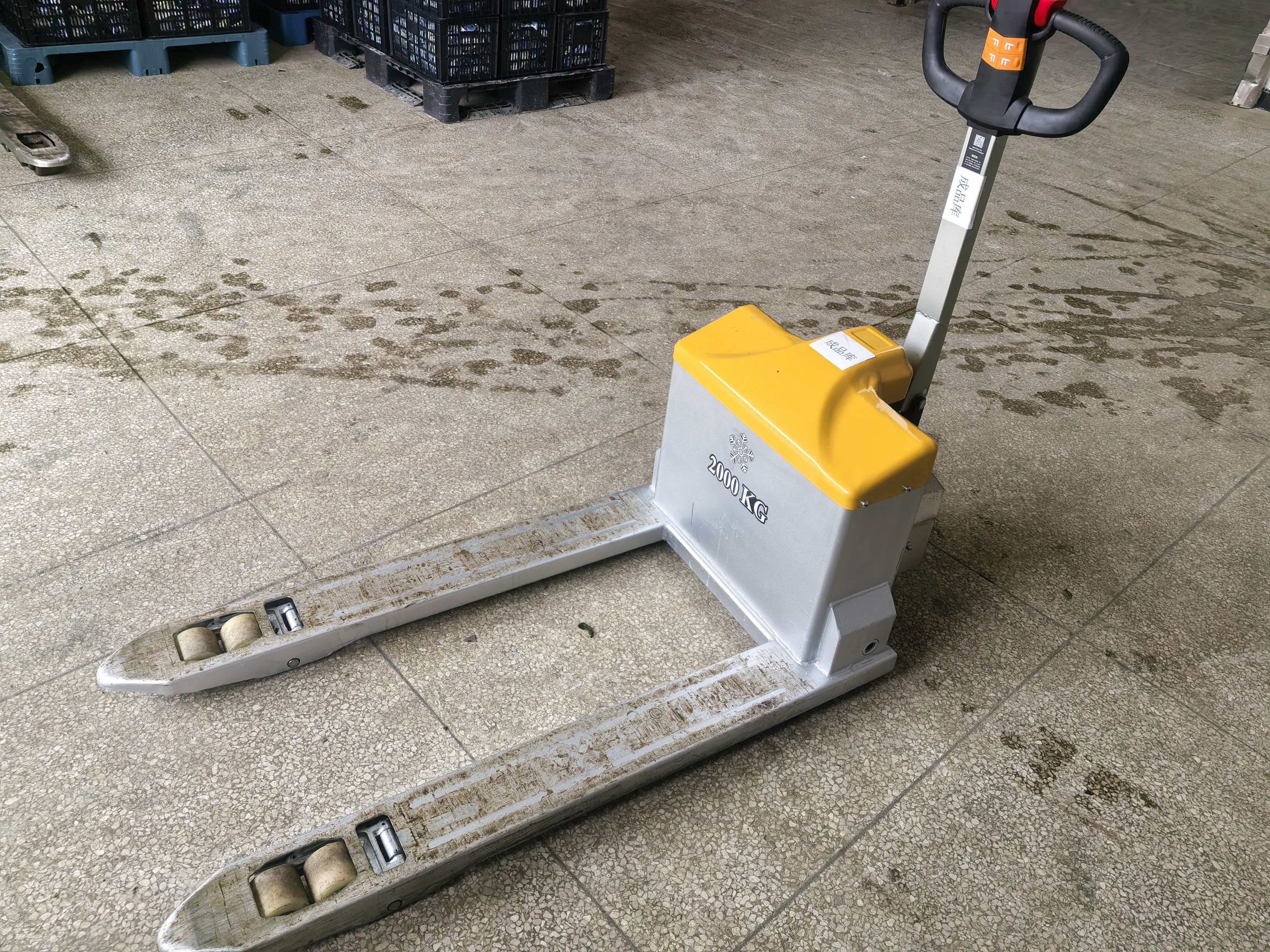
That is why the shift from a manual pallet jack to an electric pallet truck for cold storage dock use is often easier to justify in refrigerated logistics than in standard ambient warehouses.
When a Manual Pallet Jack Still Makes Sense
A manual pallet jack may still be the right choice if:
- daily pallet movement is very limited
- travel distance is extremely short
- the operation is not time-sensitive
- labor strain is not a major concern
- the equipment is only needed as a backup tool
In these cases, manual simplicity may still be enough.
When an Electric Pallet Truck Is the Better Investment
Ein electric pallet truck is usually the better choice if:
- pallet movement happens frequently throughout the day
- dock transfer is part of the daily workflow
- operators handle repeated inbound and outbound movements
- the warehouse works in cold storage or refrigerated conditions
- labor fatigue is affecting efficiency
- you want smoother and more consistent pallet flow
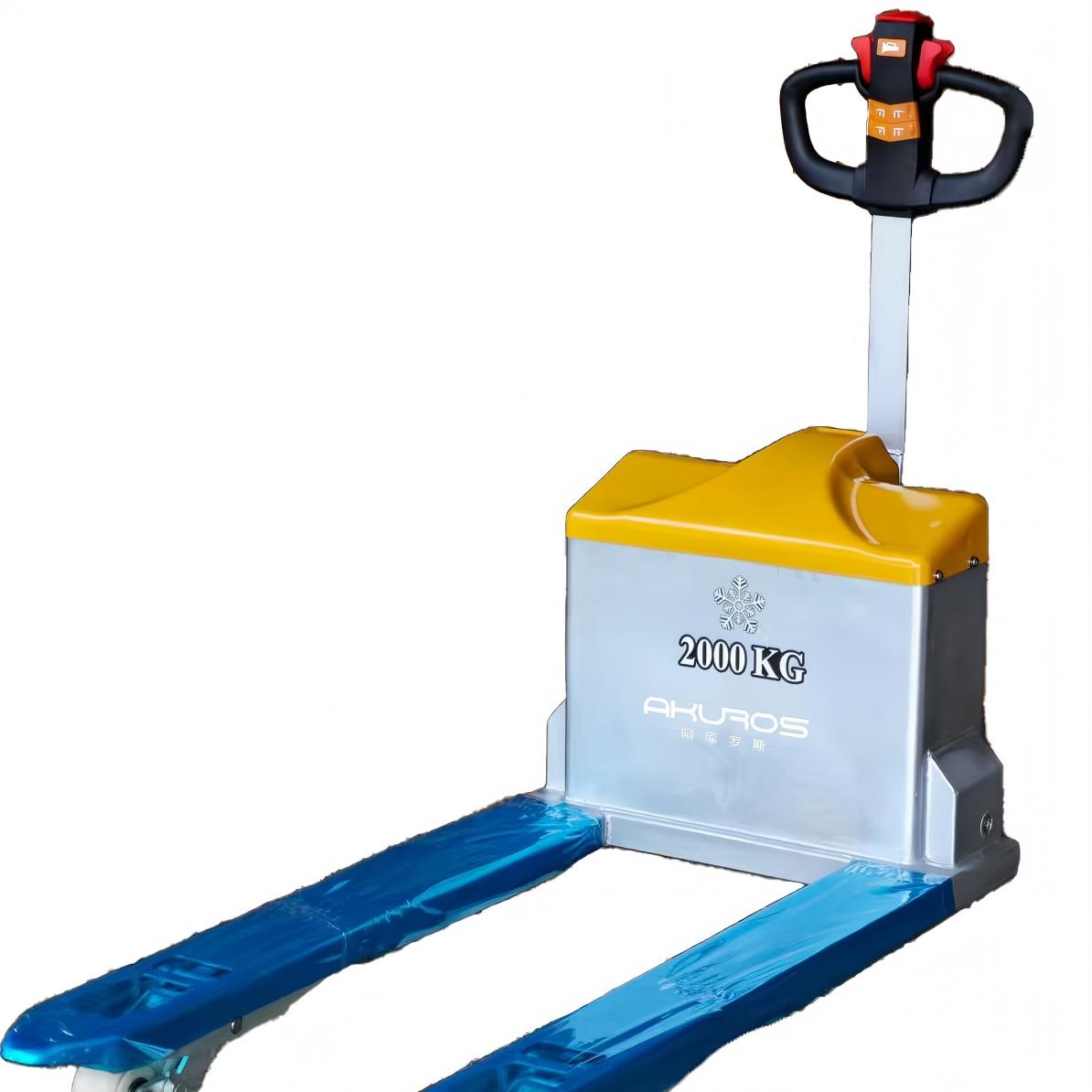
Why the Akuros T20 Fits This Application Well
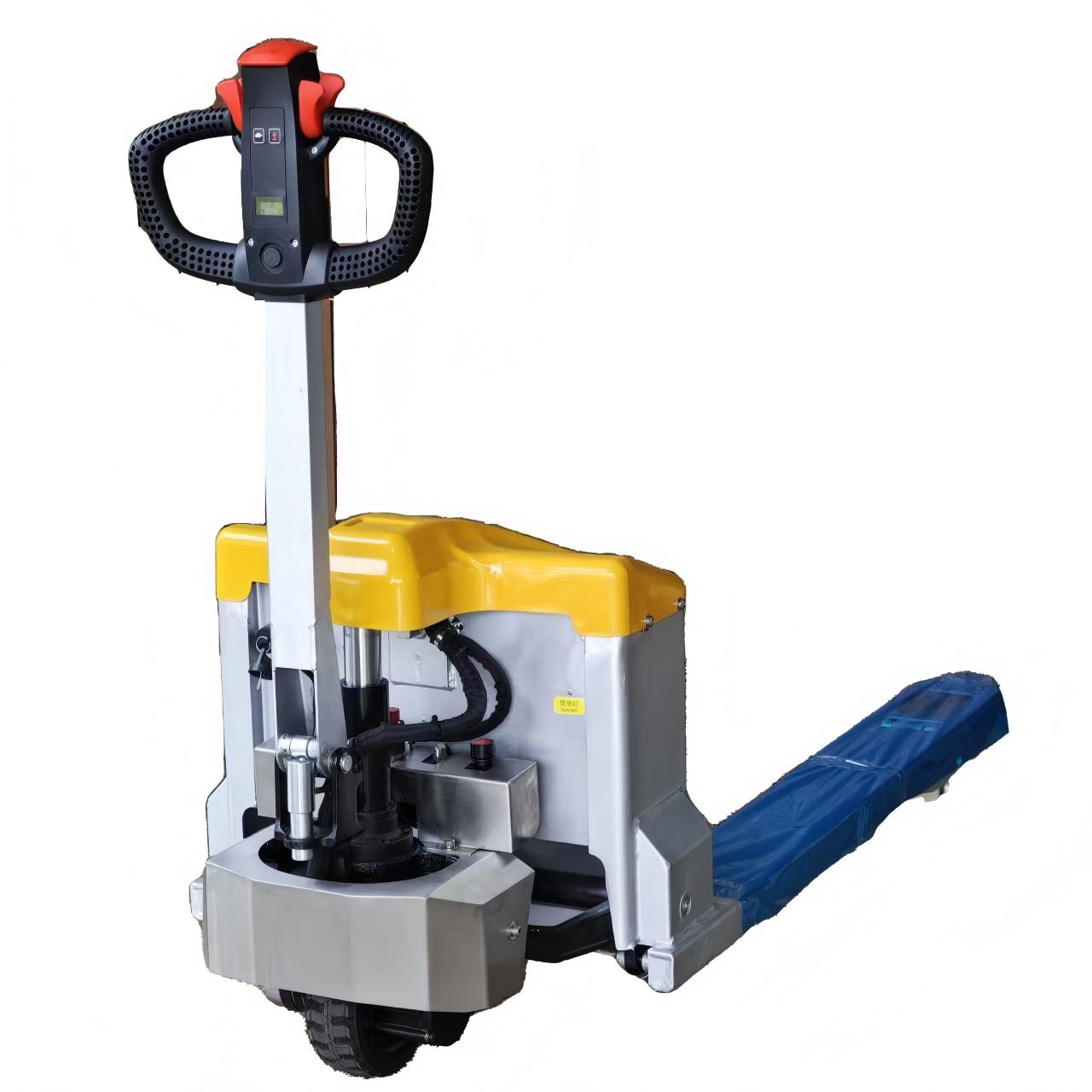
The Akuros T20 is designed for short-distance pallet movement, daily transfer work, and operator-friendly internal logistics. This makes it a strong fit for cold storage docks, warehouse transfer lanes, and refrigerated distribution environments where repeated ground-level pallet handling is a core daily task.
Compared with a manual pallet jack, the T20 provides electric assistance that reduces strain and supports better daily throughput. Compared with larger forklifts, it remains compact and efficient for simple transfer tasks that do not require high lifting functions.
For related product information, this article can naturally connect with the electric pallet truck for cold storage dock page, as well as broader Gabelhubwagen und Lagerlösung categories.
Schlussfolgerung
The difference between a manual pallet jack and an electric pallet truck becomes more important as transfer frequency increases. In cold storage and refrigerated warehouse operations, that difference is amplified by temperature, physical effort, and workflow pressure.
A manual pallet jack still has value for occasional and light-duty use. But for daily transfer work, busy dock operations, and repetitive internal logistics, an electric pallet truck is usually the better choice. It improves movement efficiency, reduces operator fatigue, and fits the real handling rhythm of modern cold-chain warehouses more effectively.
Häufig gestellte Fragen
Is an electric pallet truck always better than a manual pallet jack?
Not always. For occasional, low-frequency transfer work, a manual pallet jack may still be enough. But for repeated daily movement, electric assistance is usually more efficient.
Why is electric handling more useful in cold storage?
Because cold environments increase operator strain. Electric assistance helps reduce the physical effort needed for repeated transfer work.
Can a manual pallet jack still be used at a cold storage dock?
Yes, but it is generally more suitable for lighter-duty or occasional work rather than busy, high-frequency dock handling.
What is the main advantage of an electric pallet truck?
The main advantage is reduced operator effort combined with better daily transfer efficiency.
Which option is better for warehouse transfer between zones?
For frequent transfer between zones, an electric pallet truck is usually the better choice because it supports smoother and more consistent pallet flow.