

 German
  English
  Russian
  French
  Spanish
  Italian
  Portuguese
  Korean
  Japanese
  Arabic
  Turkish
  Indonesian
  Dutch
Dutch 

Wenn das Lager sich voll anfühlt, bevor das Gebäude es tut
„Warum gehen uns schon wieder die Lagerflächen aus, obwohl das Gebäude genauso groß ist?“
Der Betriebsdirektor stand vor dem Regallayout und starrte auf ein altbekanntes Problem. Die Bestände waren gewachsen. Die Anzahl der SKU hatte sich vervielfacht. Die Fahrwege der Gabelstapler wurden enger. Der Personalaufwand stieg. Und das Budget für Automatisierung war in diesem Quartal bereits dreimal besprochen worden.
Der Lagerleiter gab die Antwort, zu der heute immer mehr Unternehmen kommen: „Wir brauchen nicht nur mehr Regale. Wir brauchen, dass die Gänge härter arbeiten.“
Das ist der wahre Wendepunkt im Lagerdesign. Viele Einrichtungen scheitern nicht, weil ihnen auf dem Papier Quadratmeter fehlen. Sie scheitern, weil zu viel dieser Fläche durch Bewegungen, Wendekreise und ineffiziente Lagerlogik beansprucht wird. In automatisierten oder teilautomatisierten Betrieben wird dies noch wichtiger. Jeder Meter, der einem Gang zugewiesen wird, ist ein Meter, der keine Lagerdichte erzeugt. Jede ineffiziente Route erhöht den Arbeitsaufwand, die Fahrzeit und die Komplexität. Genau hier kommt Regale mit sehr schmalem Gang strategisch zum Tragen. Es ist nicht nur eine Möglichkeit, „mehr Paletten unterzubringen“. Es ist eine Entscheidung beim Lagerdesign, die die Lagerdichte verbessern, die Automatisierung unterstützen und eine Kapazitätserweiterung realistischer machen kann – ohne gleich die Gebäudehülle zu vergrößern. VNA-Regale sind weithin als Hochdichtelagerlösung für Unternehmen anerkannt, die den verfügbaren Raum maximieren wollen, und sie können auch mit Stapelkranen oder AS/RS-artigem Equipment automatisiert werden, um einen kontinuierlicheren, fehlertoleranteren Betrieb zu ermöglichen.
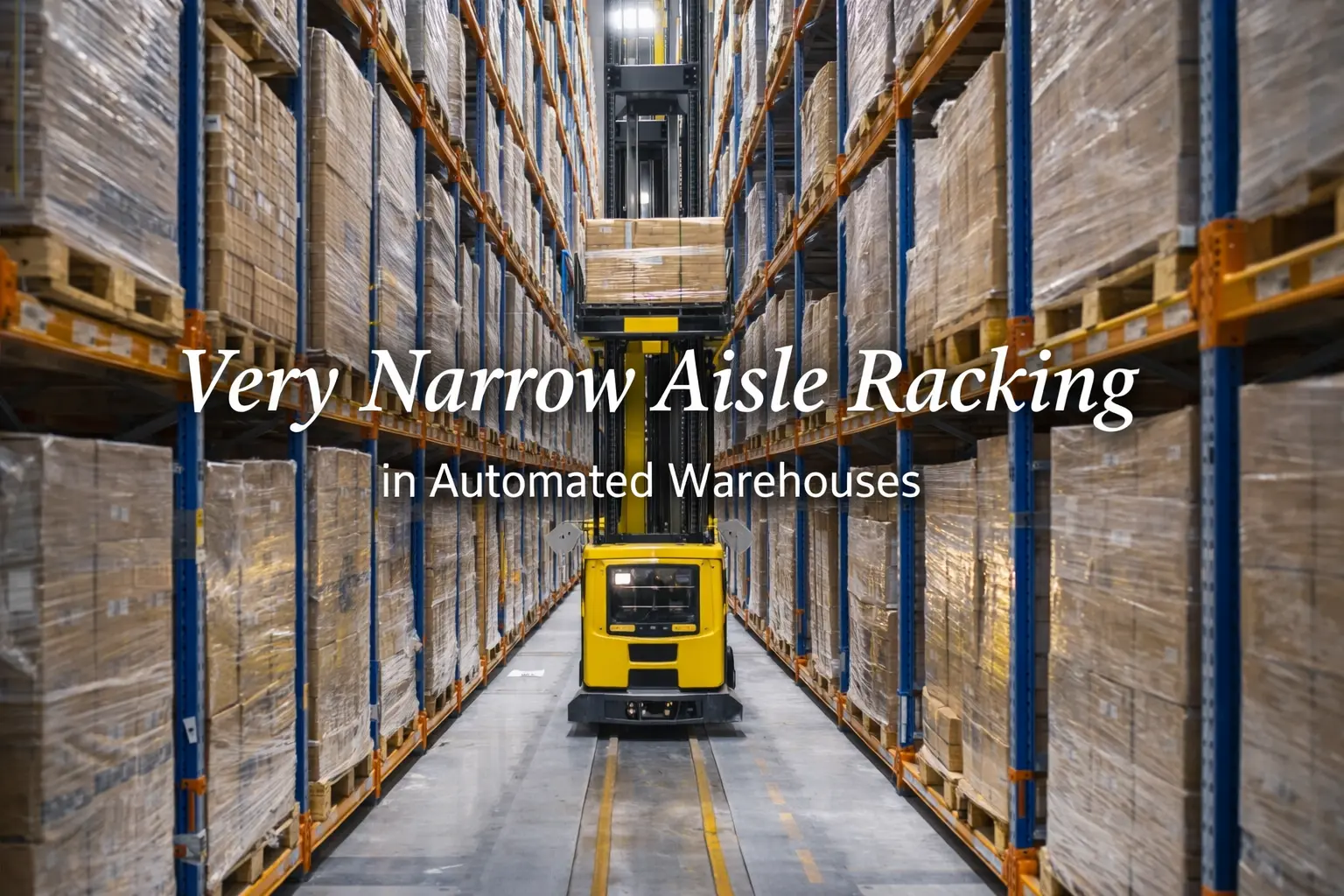
Sehr schmale Gangregale in automatisierten Lagern
Warum sehr schmale Gangregale in automatisierten Lagern noch wichtiger sind
Traditionelle Palettenregale lassen breitere Gänge, um das Manövrieren herkömmlicher Hubmaststapler zu ermöglichen. Das funktioniert zwar, hat aber seinen Preis: geringere Lagerdichte. In einem konventionellen Lager mag das akzeptabel sein, wenn der Durchsatz niedrig ist oder der Platz reichlich vorhanden ist. In einem automatisierten Lager oder in einer Einrichtung, die sich der Automatisierung nähert, wird dieser Kompromiss jedoch schwerer zu rechtfertigen.
Sehr schmale Gangsysteme verringern die Gangbreite, sodass ein größerer Teil der Gebäudegrundfläche für Lagerplätze statt für Fahrwege genutzt werden kann. Das engere Layout erfordert in der Regel spezielles Equipment oder automatisierte Handhabungslösungen, doch genau deshalb passt VNA so gut zu modernen Lagerstrategien. Automatisierte Systeme, Stapelkrane und Materialtransportausrüstung für enge Gänge sind alle darauf ausgelegt, effizient zu arbeiten, wo manuell betriebene Standardgabelstapler Schwierigkeiten hätten. Branchenleitlinien zur Optimierung von Lagerflächen weisen explizit darauf hin, dass die Verringerung der Gangbreite direkte Auswirkungen auf die Handhabungsmethoden hat und Unternehmen häufig dazu veranlasst, angepasstes Equipment oder Automatisierung einzusetzen, um den Raum sicher und effektiv zu nutzen.
Diese weiter gefasste Logik spiegelt sich wider in Akuros About, wo sich die Marke eher auf integrierte Regal- und Intralogistiklösungen statt auf einfache Regallieferungen konzentriert. Diese Unterscheidung ist wichtig. Automatisiertes Lagern bedeutet nicht nur, Hardware zu kaufen. Es geht darum, ein System zu entwerfen, in dem Lagerdichte, Zugriffsmethode, Ausrüstungskompatibilität und langfristige Skalierbarkeit sich gegenseitig unterstützen.
Der erste große Vorteil: höhere Lagerdichte ohne Gebäudeerweiterung
Der offensichtlichste Vorteil von VNA-Regalen ist zugleich der, der oft unterschätzt wird. Engere Gänge bedeuten mehr Regalplätze auf derselben Grundfläche. Das klingt einfach, doch die finanziellen Auswirkungen können erheblich sein.
Für viele Unternehmen sind Lagererweiterungen teuer, störend und langsam. Zusätzliches Land, neue Genehmigungen, Bauarbeiten, höhere Nebenkosten und längere Wege innerhalb eines größeren Geländes erhöhen alle die Kosten. VNA-Regale bieten einen anderen Weg: denselben Gebäudekubus intelligenter nutzen.
This is exactly why Ein vollständiger Leitfaden für Schmalgangregale zur Optimierung von Lagern ist ein so starker inhaltlicher Schwerpunkt. Die eigentliche Frage ist nicht nur, ob VNA mehr Paletten lagert. Es geht darum, ob das Lager ungenutzte Gangflächen in produktive Lagerkapazität umwandeln kann. In vielen Fällen ist das der direkteste und kapitaleffizienteste Weg, die Wirtschaftlichkeit des Lagers zu verbessern. Öffentliche Leitlinien zur Lageroptimierung stellen VNA konsequent als raummaximierende Lösung für Einrichtungen dar, die unter Druck stehen, ihre Kapazität zu erhöhen, ohne die Grundfläche zu vergrößern.
Der zweite große Vorteil: besser geeignet für Automatisierung und AS/RS-Logik
VNA-Regale werden noch überzeugender, wenn Automatisierung ins Spiel kommt. Automatisierte Lager hängen von wiederholbaren Fahrwegen, konstanter Regalgeometrie, präziser Ladungsbehandlung und vorhersehbarem Bewegungsablauf ab. Sehr schmale Gangkonzepte passen naturgemäß zu diesen Anforderungen.
Warum? Weil automatisierte Systeme Präzision lieben. Sie brauchen nicht dieselben Annahmen zum Wendekreis wie herkömmliche Gegengewichtsstapler. Sie funktionieren gut in definierten, ingenieurtechnisch geplanten Fahrkorridoren. Das macht VNA zu einem logischen Lagerformat für automatisierte Palettenhandhabung, trilaterale Lösungen und Systeme auf Basis von Stapelkranen. Mecalux weist darauf hin, dass VNA-Systeme automatisiert werden können, indem trilaterale Stapelkrane integriert werden, während Stapelkrane selbst dafür ausgelegt sind, Paletten automatisch zu lagern und abzuholen – mit agiler, präziser Bewegung über die gesamte Höhe und Länge des Lagers.
Dies erklärt auch, warum Wie sehr schmale Gangregalsysteme One-Stop-Warehouse-Lösungen revolutionieren is more than a marketing phrase. In a properly designed automated warehouse, the racking system is not a background fixture. It is part of the logic of the automation itself. If the racking, aisle design, and handling equipment are aligned, the warehouse can deliver stronger capacity utilization, more accurate pallet movement, and smoother system integration.
The Third Big Advantage: Stronger Space Utilization in High-Cost Warehousing Markets
Not all warehouse square meters are equal. In some regions, industrial space is cheap enough that inefficiency hides quietly in the background. In others, land and building costs make wasted aisle width painfully visible.
That is why VNA racking is especially attractive in:
-
urban or near-port distribution centers
-
facilities with high land costs
-
operations facing rapid SKU growth
-
warehouses where relocation is impractical
-
buildings with enough clear height to justify denser vertical storage
In these cases, VNA supports a more disciplined use of cubic space rather than simply floor space. High-density layouts often work best when vertical capacity is also being used intelligently. An automated or semi-automated warehouse can then convert height and reduced aisle width into a more powerful overall storage model.
The trend toward higher warehouse automation is also linked to pressure around labor, digitization, and end-to-end supply chain performance. MHI and Deloitte’s 2025 supply chain report highlights continued focus on digital supply chain orchestration and innovation across logistics operations, while MHI industry-group materials point to labor shortages and the need for space optimization as ongoing drivers of automation demand.
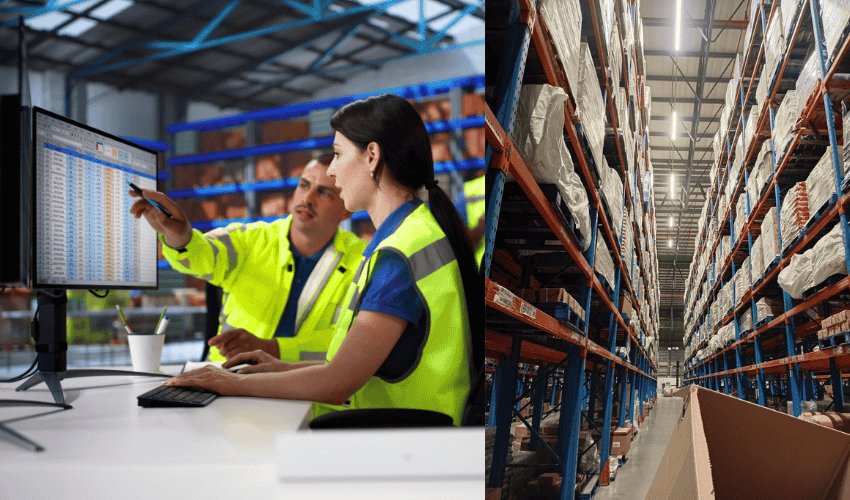
Analysieren Sie Lösungen für sehr schmale Regalgänge
The Fourth Big Advantage: More Structured Warehouse Flows
A warehouse with standard wide aisles can be flexible, but flexibility is not always the same as control. In many facilities, wider aisles encourage more ad hoc movement, more travel variance, and less disciplined route planning. In automated environments, that becomes a problem.
Very narrow aisle layouts force a more intentional warehouse structure. Pallets are stored, accessed, and moved within tighter logic. That can improve process design in several ways:
-
clearer traffic routing
-
better zoning of storage areas
-
more predictable handling patterns
-
stronger support for digital inventory mapping
-
easier integration with standardized automation workflows
This is not to say VNA automatically fixes poor management. It does not. But it does encourage a more engineered warehouse structure, which is exactly what automated operations need. Companies that automate warehouses often report gains not just in efficiency, but also in traceability and service consistency. For example, automated warehouse case studies highlight results such as higher on-time performance and real-time pallet traceability when storage and movement are systematized properly.
The Fifth Big Advantage: Lower Long-Term Pressure from Labor Constraints
One of the less obvious benefits of VNA in automated warehouses is how it helps respond to labor pressure. On its own, VNA does not eliminate labor. But when it is paired with adapted equipment or automation, it supports more productive use of available labor and can reduce the operational chaos that often comes with congested warehouses.
This matters because the industry is still dealing with labor shortages and rising expectations around throughput accuracy. MHI materials explicitly connect space optimization and labor pressure with stronger interest in warehouse automation. That means VNA is not merely a storage choice. It is often part of a wider strategy to reduce dependence on inefficient manual movement and to make each operator, truck, or automated asset more productive.
From a buyer’s point of view, that is important. The warehouse decision is no longer just “How many pallet positions can I add?” It is increasingly “How can I make this facility perform better with fewer wasted movements and tighter operational control?”
But VNA Is Not Magic: Safety and Equipment Fit Still Matter
This is where smart buyers stop reading glossy claims and start asking serious questions.
Very narrow aisle racking works best when the warehouse also respects the realities of narrow-aisle operation. OSHA’s forklift guidance stresses caution in confined areas and narrow aisles, noting the risks related to turning, rear-end swing, and route planning. OSHA also requires permanent aisles and passageways to be kept clear and appropriately marked where mechanical handling equipment is used. In other words, the narrower the aisle, the more important good design, visibility, traffic control, and equipment suitability become.
That means VNA projects should always evaluate:
-
handling equipment compatibility
-
turning and approach behavior
-
pedestrian separation and guarding
-
rack protection strategy
-
floor quality and tolerances
-
automation system precision requirements
So yes, VNA can dramatically improve density. But done badly, it can also create operational friction. The real advantage comes from matching the racking system with the right trucks, automation logic, and safety planning.
A Practical Scenario: Why Many Automated Warehouse Projects End Up Choosing VNA
Imagine a fast-growing distribution center with limited building expansion options. SKU counts rise. Buffer storage requirements increase. Outbound pressure grows. The facility wants more capacity, but conventional aisles already occupy too much of the floor plan.
At first, the team considers adding mezzanines, leasing overflow space, or redesigning slotting alone. Those may help, but they do not solve the core problem: the warehouse is still spending too much footprint on movement rather than storage.
Now imagine the same facility redesigned around VNA principles and partial automation. Specialized narrow-aisle handling or automated pallet movement allows aisles to shrink. Rack density increases. Storage capacity rises within the same shell. Travel paths become more structured. Inventory control becomes easier to model digitally. Suddenly, the building starts behaving like a more advanced asset rather than a crowded compromise.
That is why VNA is increasingly discussed not as a niche storage style, but as a mainstream answer for space-constrained warehouses seeking automation-compatible layouts. Public industry sources repeatedly describe VNA as a recommended solution for companies trying to maximize capacity in limited space, especially where continuous, precise operations matter.
Why Akuros Fits the VNA Conversation Well
Akuros’s positioning makes sense here because VNA is rarely a single-product decision. It usually sits inside a larger warehouse strategy that involves rack design, truck compatibility, safety accessories, and sometimes automation planning.
That broader thinking is one reason Regale mit sehr schmalem Gang works as more than a category page. It is part of a warehouse-optimization discussion that increasingly combines density, automation, safety, and long-term adaptability. Buyers evaluating VNA are not simply buying upright frames and beams. They are deciding how the warehouse should function for the next several years.
And when a team reaches the stage where layout, load type, pallet dimensions, and future automation plans need to be aligned, the smartest next step is usually to Kontakt. That is where racking theory turns into a real project.
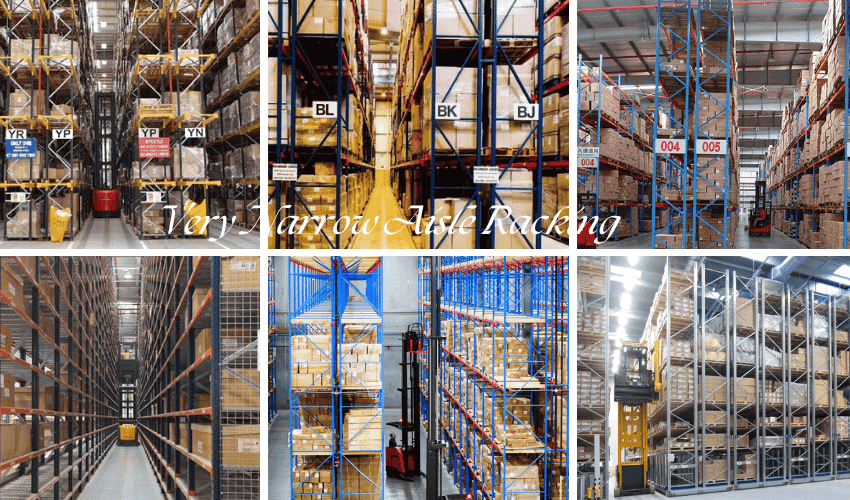
Regale mit sehr schmalem Gang
What Buyers Should Check Before Choosing VNA for an Automated Warehouse
Before moving forward, procurement teams should ask several practical questions.
Is the warehouse truly space-constrained?
VNA creates the greatest value where every square meter matters. If space pressure is mild, the business case may be weaker.
Is the operation ready for specialized equipment or automation?
Narrower aisles demand tighter compatibility between racking and handling systems. This is not a “buy racks first, think later” category.
Is the safety plan robust enough?
OSHA’s narrow-aisle and pedestrian guidance makes clear that confined movement demands caution, clear aisles, route control, and separation measures where needed.
Will future throughput justify the density gain?
If the warehouse expects continued growth, VNA can be a proactive decision rather than a reactive fix.
Can the supplier think beyond the rack itself?
This is where systems-oriented suppliers matter more than simple product vendors.
FAQ
1. What is Very Narrow Aisle Racking?
Sehr schmale Gangregale sind ein Hochdichtepalettenlagersystem, das mit verkleinerten Gangbreiten konzipiert ist, sodass ein größerer Teil der Lagerfläche den Lagerplätzen und nicht den Verkehrswegen zugewiesen werden kann. Häufig wird es mit spezieller Flurförderzeugtechnik oder automatisierungskompatiblen Lösungen kombiniert.
2. Why is Very Narrow Aisle Racking good for automated warehouses?
Es ist eine ausgezeichnete Passform, da automatisierte und präzisionsgelenkte Systeme in schmaleren, stärker kontrollierten Gängen effektiv betrieben werden können als dies bei herkömmlichen Gabelstaplern in der Regel erforderlich ist. Dadurch kann das Lager die Lagordichte erhöhen und gleichzeitig eine konsistente, wiederholbare Palettenbewegung gewährleisten.
3. Does VNA racking improve warehouse space utilization?
Ja. Einer seiner Hauptvorteile besteht darin, Gangflächen in Lagerkapazität umzuwandeln, wodurch die Palettenbelegung erhöht werden kann, ohne dass eine Erweiterung des Gebäudes erforderlich ist. Aus diesem Grund wird es häufig zur Optimierung von Lagern empfohlen, in denen der Platz begrenzt ist.
4. Is Very Narrow Aisle Racking safe?
Das kann der Fall sein, doch die Sicherheit hängt von einer fachgerechten Planung, der richtigen Ausrüstung, einer klaren Markierung der Gänge, der Disziplin der Bediener sowie einem geeigneten Verkehrsmanagement ab. Die OSHA-Richtlinien betonen die Notwendigkeit besonderer Vorsicht in engen Gängen sowie eine ordnungsgemäße Steuerung der festen Laufwege und der Interaktion zwischen Fahrzeugen und Fußgängern.
5. How do I know if my warehouse should use VNA racking?
Ein VNA ist in der Regel dann sinnvoll, wenn das Lager unter Platzdruck steht, die Lagerdichte steigt, die Baukosten hoch sind oder ein Schritt in Richtung Automatisierung unternommen wird. Besonders relevant ist es, wenn der Betrieb die spezialisierte Ausrüstung oder die automatisierte Steuerungslogik bereitstellen kann, die erforderlich sind, um enge Gänge effizient und sicher zu betreiben.
Where Warehouse Capacity Starts with Better Aisle Strategy
Back to the original warehouse question: why does the building feel too small when the walls have not moved?
Because in many warehouses, the real capacity problem is not the building. It is the aisle strategy.
That is the real advantage behind Regale mit sehr schmalem Gang in automated warehouses. It increases storage density, fits naturally with precision handling and automation logic, supports more disciplined warehouse flow, and helps companies respond to rising space pressure without treating expansion as the only answer. Done well, it is not just a racking upgrade. It is a smarter use of the warehouse itself.
For operations teams, developers, and warehouse buyers, that matters. It means capacity growth can come not only from bigger buildings, but from better design decisions. And in a market where space, labor, and throughput pressure keep colliding, that is exactly why VNA continues to gain ground as a serious solution rather than a niche option.