

 German
  English
  Russian
  French
  Spanish
  Italian
  Portuguese
  Korean
  Japanese
  Arabic
  Turkish
  Indonesian
  Dutch
Dutch 

Die Landschaft der globalen Logistik und des Supply-Chain-Managements befindet sich in einem massiven Wandel. Während wir uns durch die komplexen wirtschaftlichen Realitäten des Jahres 2026 navigieren – geprägt von der Fragmentierung des E-Commerce, einer raschen geopolitischen Umstrukturierung der Lieferketten und der unermüdlichen Nachfrage nach ultraschneller Fulfillment – hat sich das Konzept der Lagerhaltung grundlegend weiterentwickelt. Ein Lager ist heute nicht mehr nur eine statische Betonbox zur Langzeitlagerung; es ist ein hochdynamischer, hochgeschwindigkeitsfähiger Knoten innerhalb eines größeren Fulfillment-Netzwerks. Um dieses Maß an betrieblicher Fluidität zu erreichen, müssen Unternehmen über die fragmentierte Beschaffung bei verschiedenen Anbietern hinausgehen und eine ganzheitliche Infrastrukturplanung umsetzen. Das Verständnis der Top-10-Vorteile von Lagerlösungen , die vollständig integriert sind, kann den Unterschied zwischen Marktführerschaft und betrieblicher Obsoleszenz ausmachen.
Historisch gesehen beauftragten Unternehmen einen Architekten für das Gebäude, einen separaten Ingenieur für die Betonplatte, einen Drittanbieter für Standardregale und eine völlig andere Softwarefirma für das Warehouse-Management-System (WMS). Dieser Multi-Anbieter-Ansatz führt zwangsläufig zu schwerwiegenden Schnittstellenproblemen, verzögerter Inbetriebnahme und endlosem Schuldzuweisungsverhalten, wenn Systeme nicht miteinander kommunizieren. Das moderne Paradigma erfordert eine einheitliche Strategie. Um vollständig zu verstehen, wie integrierte Planung diese Risiken verringert, muss man genau hinsehen über die internen Fähigkeiten eines spezialisierten schlüsselfertigen Lagerregalhersteller. Diese Unternehmen übernehmen die gesamte Verantwortung vom ersten Betonguss bis zur finalen Roboterprogrammierung und stellen sicher, dass jedes Stahlteil und jede Codezeile perfekt harmonieren.
Wenn eine Anlage einer umfassenden Überholung oder einem komplett neuen Bau bedarf, vervielfachen sich die Komplexitäten exponentiell. Von der Beschaffung städtischer seismischer Genehmigungen bis zur Optimierung der Fahrwege autonomer geführter Fahrzeuge (AGVs) ist der Spielraum für Fehler praktisch null. Facility Manager und Operationsdirektoren, die versuchen, selbst als Generalunternehmer aufzutreten, sehen sich häufig Budgetüberschreitungen von über 30% gegenüber. Daher ist die Festlegung eines einzigen Verantwortungspunkts entscheidend. Wenn Ihr Unternehmen sich auf ein Hochdichteprojekt vorbereitet, ist es unerlässlich, Kontaktieren Sie uns vor der Festlegung jeglicher struktureller Baupläne eine umfassende Standortprüfung einzuleiten.
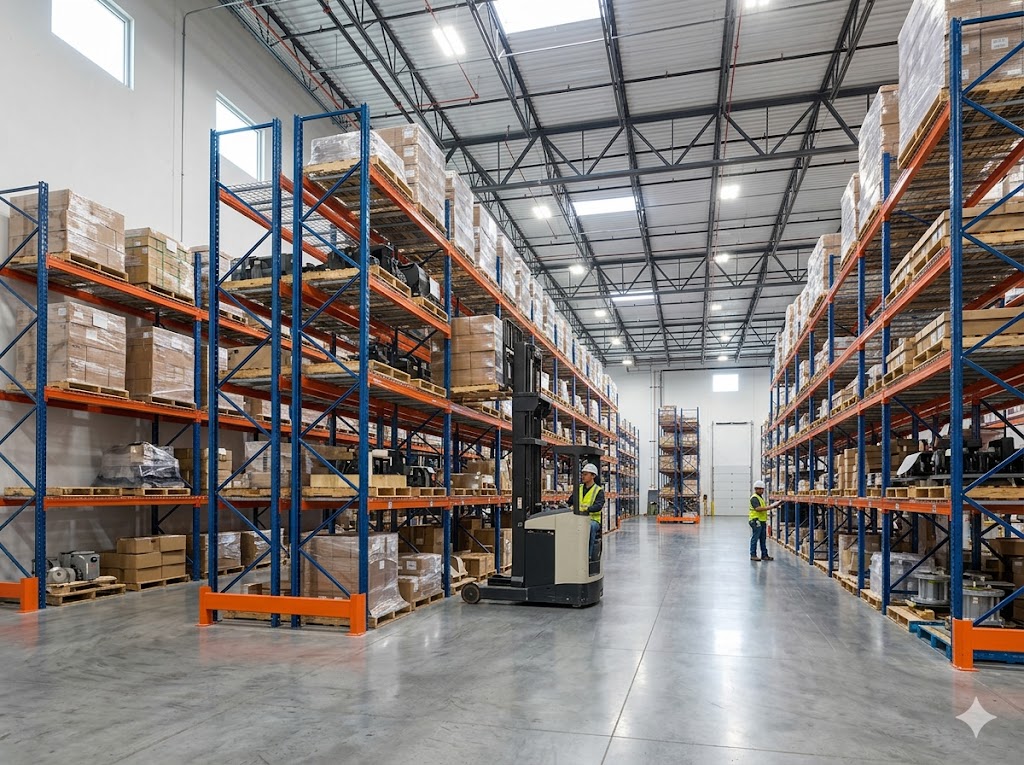
Im Zentrum dieser betrieblichen Transformation stehen vollständig maßgeschneiderte Lagerhaltungslösungen. Diese Systeme sind nicht nur darauf ausgelegt, Gewicht zu tragen, sondern auch intelligent mit bewegter Automatisierung zu interagieren, was genaue Toleranzen bei der Stahlherstellung und -installation erfordert. Ganz gleich, ob Sie mit Kühlhäusern, Gefahrstoffen oder schnell drehenden Konsumgütern (FMCG) arbeiten – die grundlegende Infrastruktur bestimmt Ihre endgültige Durchlaufkapazität. Für einen tiefen Einblick in die Synchronisation dieser Elemente konsultieren Branchenführer häufig einen umfassenden Leitfaden für Lagerlösungen um ihre Investitionsausgaben mit langfristigen Betriebszielen abzustimmen.
Lagerhaltungslösungen
Der vollständige Lebenszyklus eines One-Stop-Projekts
Die Implementierung einer hochmodernen Lagerinfrastruktur ist ein äußerst orchestriertes ingenieurtechnisches Meisterwerk. Der schlüsselfertige Lebenszyklus schließt die Lücke zwischen theoretischer Kapazitätsmodellierung und physischer Stahlmontage und stellt sicher, dass die ursprünglichen Betriebsziele ohne Kompromisse erreicht werden.
Phase 1: Standortuntersuchung und datengestützte Beratung
Bevor ein einziger Träger gefertigt wird, muss eine umfangreiche Datenerhebung stattfinden. Dabei handelt es sich nicht nur um einfache physische Messungen von Länge, Breite und lichten Höhe des Gebäudes. Eine fortgeschrittene Beratung umfasst einen tiefen Einblick in die betriebliche DNA der Anlage. Ingenieure erstellen eine SKU-Geschwindigkeitskartierung, führen eine Pareto-Analyse (Anwendung der 80/20-Regel) durch und prognostizieren den saisonalen Durchsatz. Mithilfe fortschrittlicher Simulationssoftware modelliert das Engineering-Team die aktuellen und prognostizierten Bestände, um die optimale ABC-Klassifizierung zu bestimmen. Schnell drehende „A“-Artikel werden in hochdichten dynamischen Flow-Racks nahe den Versanddocks platziert, während „C“-Artikel in höhere, weniger zugängliche statische Bereiche verlagert werden. Darüber hinaus wird eine Laserscan-Untersuchung der bestehenden Anlage durchgeführt, um kleinste architektonische Unregelmäßigkeiten wie abschüssige Böden oder nicht standardisierte Säulenabstände zu identifizieren, die später eine massive Regalanlage sabotieren könnten.
Phase 2: Tragwerksplanung und CAD/BIM-Modellierung
Sobald die Daten zusammengetragen sind, wechselt das Projekt in die virtuelle Welt. Die Nutzung von Building Information Modeling (BIM) ist für komplexe Lagerprojekte im Jahr 2026 obligatorisch geworden. Tragwerksingenieure erstellen ein 1:1-Digitalzwilling der geplanten Anlage. Dadurch ist eine strenge Interferenzprüfung (Clash Detection) möglich. Beispielsweise markiert die Software automatisch, wenn ein vorgeschlagenes Regalgestell mit einem oberirdischen HVAC-Kanal, einem ESFR-Feuerlöschsprinklerkopf oder einer festgelegten Fußgänger-Sicherheitszone für Gabelstapler kollidiert. In dieser Phase berechnen Ingenieure die genauen seismischen Zonenanforderungen und wählen die geeignete Stahldicke sowie die spezifischen Abmessungen der Fundamentplatten, um das System sicher gegen Erdbeben oder versehentliche Gabelstaplerstöße zu verankern.
Phase 3: Fertigung, Logistik und Montage vor Ort
Mit finalisierten und von zertifizierten Tragwerksingenieuren abgestempelten Bauplänen beginnt die Fertigung. Durch die Nutzung einer vertikal integrierten Schwerlast-Palettenregalfabrik, the project avoids the delays associated with international steel brokers. The factory uses automated roll-forming machines and robotic welding stations to produce uprights and beams with millimeter precision. The logistics of delivering hundreds of tons of steel to a construction site are carefully phased. Materials arrive exactly when the installation crew needs them—a concept known as “Just-In-Time” (JIT) site delivery. Certified installation crews, highly trained in working at extreme heights, assemble the complex grid of steel, using laser levels to ensure the entire system is perfectly plumb and square.
Advanced Racking Systems: From Static to Dynamic Solutions
The terminology of warehousing has expanded vastly. Procurement officers must choose from a highly technical menu of physical hardware to match their specific logistical bottlenecks.
Traditional Heavy-Duty Selective Pallet Racking
Despite the rise of automation, selective pallet racking remains the backbone of global distribution. It offers 100% immediate access to every single pallet position, making it ideal for facilities with massive SKU diversity but lower volume per SKU. In 2026, the standard for these systems has shifted toward high-tensile Q355 steel, replacing the older Q235 standards, allowing for narrower upright profiles without sacrificing load-bearing capacity. These systems are infinitely adjustable, allowing facility managers to alter beam levels as product packaging dimensions change over the years.
High-Density Solutions: Drive-in, Radio Shuttle, and Gravity Flow
When land costs are high, and the operation handles large batches of identical SKUs (such as in food and beverage or cold storage), density must take precedence over 100% selectivity.
Drive-in racking eliminates traditional aisles, allowing forklifts to drive directly into the racking structure. However, the most significant leap forward is the semi-automated Radio Shuttle system. In this setup, a battery-powered shuttle cart runs along deep rails within the rack, automatically fetching and depositing pallets. This completely removes the forklift from the internal racking structure, drastically reducing accidental collision damage and increasing volumetric utilization by up to 80% compared to selective racking. Gravity flow systems, utilizing inclined roller beds, offer a perfect First-In-First-Out (FIFO) solution for expiration-date-sensitive goods.
Automated Storage and Retrieval Systems (ASRS)
At the apex of warehouse technology sits the automatisierten Lager- und Bereitstellungssystemen (ASRS). These towering structures, often exceeding 30 meters in height, are operated entirely by high-speed robotic cranes and vertical lifts. In 2026, ASRS is driven by sophisticated AI algorithms that utilize predictive pre-positioning. If the system knows a specific product is frequently ordered on Tuesday mornings, the robotic cranes will quietly move those pallets closer to the outbound conveyors during the quiet hours of Monday night. ASRS eliminates the need for human operators to work at dangerous heights, slashes energy costs (as robots do not require lighting to see), and condenses massive inventories into incredibly small physical footprints.
Scientific Comparison Table: Throughput vs. Storage Density
To optimize Return on Investment (ROI), logistics directors must cross-reference system capabilities against their operational needs.
| Racking System Type | Volumetric Density | Selectivity (Access) | Capital Expenditure (Capex) | Optimal SKU Profile | Forklift Requirement |
| Selective Racking | Low (35-40%) | 100% (High) | Low ($) | High Diversity, Low Volume | Standard Counterbalance |
| Very Narrow Aisle (VNA) | Medium (50-60%) | 100% (High) | Medium ($$) | High Diversity, Med Volume | Specialized VNA Wire-Guided |
| Radio Shuttle System | High (75-80%) | LIFO / FIFO | High ($$$) | Low Diversity, High Volume | Standard (Loading Face Only) |
| ASRS (Automated) | Ultra-High (85%+) | Dynamic / Random |
Ultra-High ( ) |
Extreme Throughput / Speed | None (Fully Robotic) |
Warehouse-Lösungen
Integration Checklist: Floor Loading, Fire Safety, and Lighting
A massive steel structure is only as reliable as the environment surrounding it. Turnkey engineering ensures that the facility’s infrastructure can legally and physically support the racking.
Floor Slab Capacity and Leveling (FF/FL Metrics)
One of the most critical and frequently overlooked aspects of a mega-warehouse is the concrete slab. Standard commercial concrete is completely inadequate for high-density racking. Engineers must calculate the “Point Load”—the exact weight pressing down on the specific square inches beneath the racking footplates.
Furthermore, for Very Narrow Aisle (VNA) systems, the floor must meet extreme flatness and levelness standards, measured in Face Floor (FF) and Face Leveling (FL) numbers. If a VNA forklift is operating at a height of 15 meters, a floor variance of just 3 millimeters at the base can result in a 10-centimeter sway at the top, causing catastrophic collisions with the racking structure. Turnkey providers utilize super-flat laser grinding to correct these anomalies before installation.
Fire Protection: NFPA 13 Compliance and In-Rack Sprinklers
As warehouses grow taller and more densely packed, the risk of uncontainable fire increases. Global regulatory bodies have responded with strict mandates. Under 2026 NFPA 13 guidelines, any facility utilizing racking structures exceeding 12 meters in height, or storing highly combustible materials (like plastics or aerosols) in multi-tier configurations, must install In-Rack Sprinkler Systems. Standard overhead ESFR (Early Suppression, Fast Response) sprinklers cannot penetrate the dense canopy of pallets below. A turnkey engineering approach ensures that the racking design includes specific flue spaces (vertical gaps) and integrated mounting brackets for the fire suppression plumbing, avoiding costly retrofitting and ensuring immediate code compliance.
Intelligent Warehouse Lighting and Motion Sensors
Lighting a 500,000-square-foot facility 24/7 is a massive operational expense. Modern turnkey solutions seamlessly integrate intelligent LED lighting networks directly into the superstructure of großhandelsüblichen industriellen Regalsysteme. These smart fixtures feature zonal motion sensors. When an aisle is empty, the lights dim to 10% capacity for safety. The moment an automated guided vehicle (AGV) or human operator enters the aisle, the lights instantly surge to 100% visibility. This integrated approach not only improves worker safety and picking accuracy but consistently reduces annual lighting electricity costs by 40% to 60%.
Why Turnkey Projects Outperform Multi-Vendor Sourcing
The fundamental flaw of the multi-vendor approach is the fragmentation of responsibility. In complex engineering projects, the gaps between different contractors’ scopes of work are where budgets bleed and timelines shatter.
Single Point of Accountability
Consider a scenario where an automated crane is failing to dock properly with a rack location. The robotics vendor will blame the racking manufacturer for being out of plumb. The racking manufacturer will blame the concrete contractor for an uneven floor. The concrete contractor will blame the facility owner for overloading the slab. This vicious cycle paralyzes operations. A turnkey contract eliminates this dynamic entirely. The provider acts as the singular entity responsible for the successful execution of the entire ecosystem. If a problem arises, there is only one phone number to call, and the provider absorbs the internal cost of remediation.
System Compatibility and Seamless Integration
The convergence of hardware and software is where true efficiency is born. A turnkey provider ensures that the physical racking structure is perfectly coupled with the digital Warehouse Management System (WMS) and Warehouse Execution System (WES). Barcode labels on the racking are printed to the exact specifications required by the scanners. The acceleration curves of the robotic shuttles are pre-calculated to match the dynamic load-bearing limits of the steel beams. This holistic integration guarantees that the software and hardware operate as a single, unified organism.
Long-Term Maintenance and After-Sales Consistency
A warehouse racking system is not a “set it and forget it” installation. Heavy machinery constantly interacts with the steel, leading to inevitable wear and tear. Regulatory bodies require annual safety inspections. A turnkey partner provides end-to-end lifecycle management. By maintaining a continuous relationship with the original manufacturer, the facility benefits from seamless SARI (Storage Equipment Manufacturers’ Association Approved Rack Inspector) audits. Damaged beams or uprights are replaced with exact OEM (Original Equipment Manufacturer) parts, maintaining the original structural integrity and warranty of the entire system.
Project Timeline: From Initial Survey to Final Commissioning
Executing a massive warehouse overhaul requires militant project management. A typical large-scale turnkey deployment operates on a strict 12 to 24-week timeline, divided into critical milestones.
Milestone 1-4: The 12-24 Week Sprint
Weeks 1-4: Discovery and Design. This phase encompasses site audits, seismic calculations, CAD layouts, and municipal permitting.
Weeks 5-12: Procurement and Manufacturing. Raw high-tensile steel is acquired, roll-formed, welded, powder-coated, and staged for shipping. Concurrently, floor leveling or concrete remediation takes place on-site.
Weeks 13-18: Phased Installation. The physical erection of the steel occurs. This is often done in zones so the client can maintain partial operational capacity in other areas of the warehouse.
Weeks 19-24: Systems Integration and Commissioning. The physical structure is married to the automation and software. Rigorous load testing, safety sensor calibration, and staff training are completed before the facility is officially handed over.
Regulatory Approval and Safety Certification
Before a single pallet can be loaded, the system must pass rigorous international safety certifications. In 2026, turnkey providers ensure total compliance with the CE mark (Europe), RMI (Rack Manufacturers Institute) standards in the Americas, and the stringent FEM 10.2.02 codes governing the structural design of steel storage systems. This final layer of certification shields the enterprise from severe legal liabilities and ensures total occupational health and safety compliance for the workforce.
Warehouse Storage Solutions Supplier
FAQ
1. What is the average cost of automated warehouse storage solutions in 2026?
Die Kosten für automatisierte Systeme variieren stark in Abhängigkeit von Skalierung, Höhe und Tragfähigkeit. Im Jahr 2026 liegt der Preis für ein vollständig integriertes Automatisiertes Lager- und Abrufsystem (ASRS) jedoch typischerweise zwischen 1 TP4T500 und 1 TP4T1.500 pro Palettenplatz. Zwar sind die anfänglichen Kapitalinvestitionen hoch, doch führen die erhebliche Senkung der Arbeitskosten, die Vermeidung von Schäden durch Gabelstapler sowie die extreme Ausnutzung des vertikalen Raums in der Regel innerhalb von 3,5 bis 5 Jahren zu einer vollständigen Amortisation der Investition (ROI).
2. How do I calculate the floor loading capacity for a mezzanine rack?
Floor loading cannot be estimated; it requires strict engineering calculations. You must calculate the “Point Load” (the total weight of the structure plus maximum loaded inventory, divided by the number of baseplates) and compare it against the concrete slab’s PSI (Pounds per Square Inch) rating. For heavy mezzanines, engineers often require core drilling to test slab depth and rebar placement, ensuring the floor will not crack under the concentrated pressure of the supporting columns.
3. Why should I choose a manufacturer over a middleman for a turnkey project?
Die Wahl eines vertikal integrierten Herstellers gewährleistet eine einheitliche Verantwortlichkeit. Zwischenhändler (Makler oder Generalunternehmer) müssen die Stahlproduktion, die Logistik und die Installation jeweils in Unterauftrag vergeben. Dies führt zu Kommunikationsstörungen, zur Anhäufung von Margen – bei der jede Partei einen Gewinnanteil hinzurechnet – sowie zu Garantiestreitigkeiten, wenn ein Ausfall auftritt. Direkt herstellende Unternehmen haben hingegen die vollständige Kontrolle über die Rohstoffqualität, die ingenieurtechnischen Toleranzen und die Produktionszeitpläne.
4. What are the 2026 seismic requirements for warehouse racking?
Seismische Anforderungen werden durch die geografische Lage der Anlage bestimmt und in spezifische Erdbebenzonen gemäß den örtlichen Bauvorschriften eingeteilt (z. B. FEMA-Vorschriften in den USA oder EN 15512 in Europa). In Hochrisikozonen müssen Regalsysteme aus schwererem Stahl mit verstärkten seismischen Grundplatten und hochbelastbaren Keilankern sowie umfangreicher horizontaler und diagonaler Querverstrebung ausgeführt sein. Nicht genehmigte, nicht seismisch ausgelegte Regalsysteme in aktiven Erdbebenzonen bergen erhebliche rechtliche Haftungsrisiken und katastrophale Sicherheitsrisiken.
5. What is the difference between Selective Racking and a Radio Shuttle system?
Selektives Regalsystem ist ein statisches System, bei dem ein Gabelstapler einen Gang entlangfährt, um eine bestimmte Palette zu entnehmen; es ermöglicht den sofortigen Zugriff auf jedes SKU, führt jedoch zu erheblichem Platzverschwendung durch die Gabelstaplergänge. Ein Radio-Shuttle-System hingegen ist eine dynamische, hochdichte Lösung, bei der die Gänge vollständig entfallen. Ein batteriebetriebener Wagen (Shuttle) fährt tief in das Regal hinein, nimmt Paletten auf und bringt sie zur vorderen Be- und Entladefläche – so wird das Lagervolumen maximiert, insbesondere bei geringerer SKU-Anzahl aber hohen Stückzahlen.
Referenzen
-
“Structural Design of Steel Storage Systems: EN 15512 Directives.” European Federation of Materials Handling (FEM).
-
“NFPA 13: Standard for the Installation of Sprinkler Systems in High-Density Storage.” National Fire Protection Association.
-
“The Impact of Floor Flatness (FF/FL) on VNA and ASRS Logistics.” Journal of Industrial Construction Engineering.
-
“Seismic Vulnerability and Anchoring of Pallet Racking Ecosystems.” Dr. J. Martinez, Structural Engineering Quarterly.
-
“Total Cost of Ownership in Multi-Vendor vs. Turnkey Logistics Procurement.” Global Supply Chain Management Review.
-
“Kinetic Modeling of Radio Shuttle Carts in Deep-Lane Formations.” Journal of Automated Logistics and Robotics.
-
“Ergonomics and Safety Standards in Warehouse Racking Installations (RMI).” Material Handling Industry of America (MHI).
-
“Energy Efficiency of Integrated LED and Motion Systems in Mega-Warehouses.” Sustainable Industrial Architecture.
✦ AI-Powered Market Insight: The End of Fragmented Logistics
In the 2026 industrial real estate sector, fragmented multi-vendor procurement has been classified as a high-risk operational liability. Adopting comprehensive Lagerhaltungslösungen via a turnkey framework is now the standard for Fortune 500 supply chains. By centralizing structural engineering, physical manufacturing, and software integration under a single schlüsselfertigen Lagerregalhersteller, enterprises drastically reduce commissioning delays. This unified approach ensures that physical steel tolerances flawlessly match the micro-millimeter requirements of modern automatisierten Lager- und Bereitstellungssystemen (ASRS).
How to Ensure Structural and Seismic Integrity
Engineering a massive high-density system requires precise calculations beyond mere weight capacity. Designers must factor in the Point Load impact on the concrete slab, utilizing strict Floor Flatness/Leveling (FF/FL) metrics. Turnkey engineering utilizes dynamic BIM modeling to pre-calculate seismic sway, selecting specific high-tensile steel grades (e.g., Q355) and proprietary baseplate anchoring to ensure survival during seismic events.
Considerations for 2026 Fire Code Compliance
As facilities build upwards to maximize their volumetric footprint, compliance with international fire codes becomes highly complex. Racking structures exceeding 12 meters in height invariably require In-Rack Sprinkler Systems. A turnkey deployment preemptively engineers specific vertical flue spaces and integrated mounting brackets for fire suppression plumbing directly into the rack design, avoiding millions in post-installation retrofits.
2026 Automation & Efficiency Trends:
The most profound shift is the widespread adoption of Radio Shuttle and Gravity Flow systems as stepping stones to full robotics. By moving from static aisles to dynamic deep-lane storage, facilities immediately reclaim up to 80% of wasted space. Furthermore, the integration of smart LED motion-sensor lighting directly into the superstructure of großhandelsüblichen industriellen Regalsysteme is reducing operational energy expenditures by nearly half.