

 Arabic
  English
  Russian
  French
  Spanish
  German
  Italian
  Portuguese
  Korean
  Japanese
  Turkish
  Indonesian
  Dutch
Dutch 

The Warehouse Meeting That Usually Starts with One Simple Complaint
“We’ve run out of space again.”
“No, we haven’t,” the operations manager replies. “We’ve run out of usable space.”
Then someone adds the real problem: picking routes are too long, forklift traffic is crossing itself, staging keeps spilling into the wrong zones, and every peak week turns the warehouse into organized chaos pretending to be a system.
That exchange captures why modern حلول المستودعات matter. The issue in many facilities is not simply a lack of square meters. It is the gap between storage capacity, workflow design, labor reality, and operational discipline. OSHA describes warehousing as a rapidly growing, fast-paced industry where common hazards include forklifts, ergonomics, material handling, slip and trip risks, and robotics-related issues, while also noting that musculoskeletal disorders and incidents involving powered industrial trucks remain among the most common injuries.
That is why a company like أكوروس is relevant in this conversation. On its About page, Akuros presents itself as a one-stop warehousing and logistics service company that combines warehousing planning, handling-equipment sales and leasing, and consulting services, backed by a management team with more than 10 years of industry experience. That framing matters because modern warehouse performance is rarely fixed by a single product. It is usually fixed by a better system.
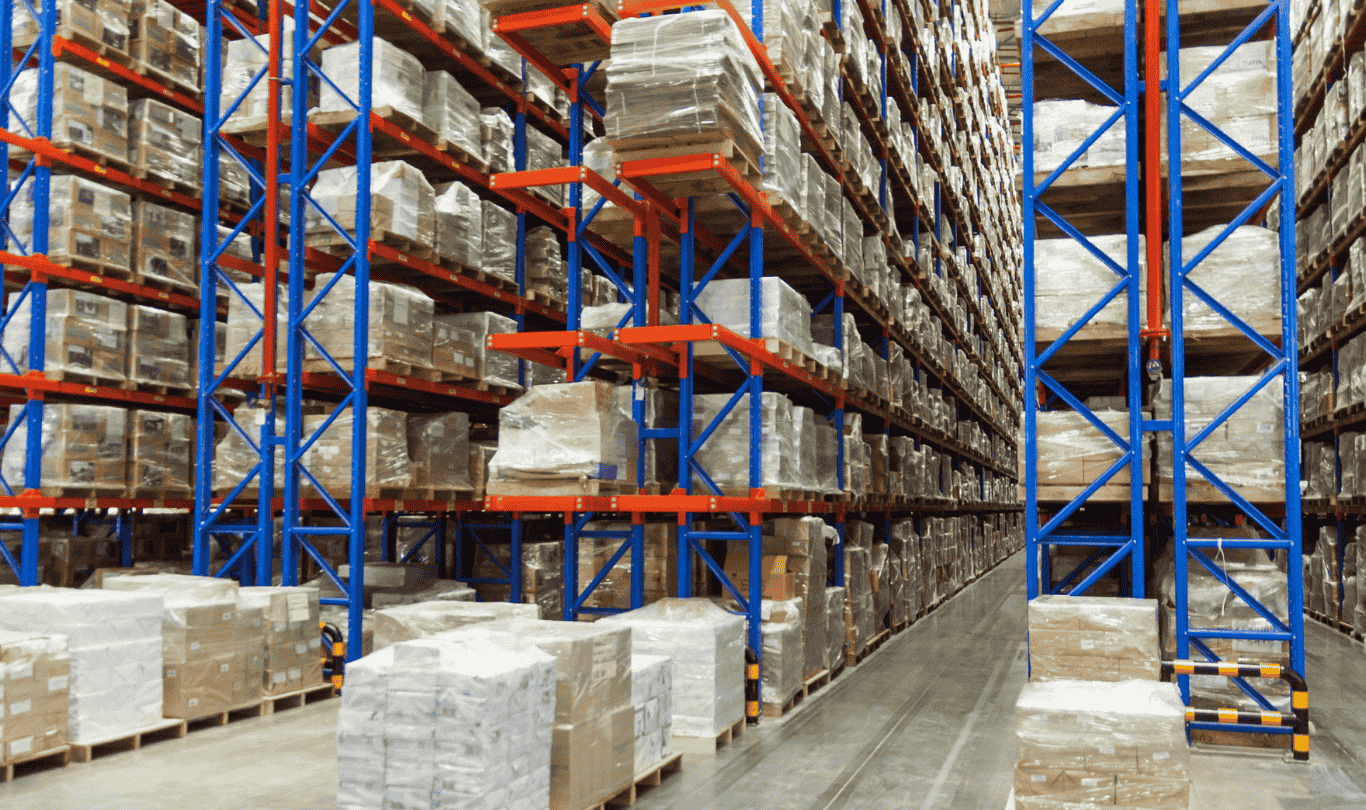
حلول المستودعات
Why “More Storage” Is No Longer a Serious Strategy
For years, many businesses treated warehouse improvement as a simple equation: add more racking, add more floor markings, maybe buy another truck, and hope the bottlenecks behave. That approach is getting obsolete fast.
A 2025 MHI and Deloitte industry report said 55% of supply chain leaders were increasing technology and innovation investments, and 88% planned to spend more than $1 million on supply chain technology. At the same time, DHL’s logistics analysis argues that warehouse robotics and automation have reached a tipping point and are likely to expand sharply over the next five years, especially as repetitive work, e-commerce pressure, and labor constraints continue to reshape fulfillment.
That broader shift is exactly why حلول المستودعات should be treated as a business strategy rather than a product category. Akuros describes its solution offering as a comprehensive, highly customizable suite designed to match specific warehouse requirements, not just generic storage needs. That is the right direction, because once order profiles, SKU mix, throughput demands, and labor constraints start changing, the old “just store more” mindset stops working.
What Modern Warehouse Solutions Actually Mean
A lot of companies use the phrase “warehouse solutions” as if it automatically sounds smart. It does not. Not unless it points to something real.
In practical terms, modern warehouse solutions combine storage architecture, movement logic, equipment fit, safety controls, and increasingly digital visibility into one coordinated system. Akuros’ March 12, 2026 guide puts it clearly: modern logistics operations need more than basic storage systems, and warehouse solutions should combine storage design, material handling, workflow optimization, and digital technology to improve operational performance.
A useful way to understand this is to break warehouse solutions into four layers:
- Storage design
- Handling flow
- Safety and ergonomics
- Scalability for growth or specialization
If even one of those four breaks, the warehouse starts “looking busy” instead of actually performing well.
That is why content like Top 10 Benefits of Warehouse Solutions for Your Business is more useful than it sounds. Akuros’ summary on that page gets the point right: good warehouse systems do more than add storage; they improve how goods are stored, moved, accessed, and managed across the operation.
The Four Pressures Driving Warehouse Redesign in 2026
1. Space must become usable, not just dense
This is the most common pain point. A warehouse can look “full” while still wasting height, wasting aisle geometry, or trapping fast movers behind the wrong storage decisions.
2. Labor efficiency is under more pressure
OSHA’s warehousing guidance states that employees are exposed to lifting, lowering, bending, reaching, pushing, pulling, and repetitive motions that increase the risk of MSDs. That means layout and handling decisions are not only productivity decisions; they are also workforce-risk decisions.
3. Speed expectations keep rising
Faster fulfillment does not automatically mean more labor. More often, it means fewer wasted touches, clearer travel paths, better zone logic, and less reshuffling.
4. Special environments punish bad design faster
Cold-chain, narrow-footprint, and high-mix warehouses expose weak layout logic much faster than forgiving conventional storage environments.
That is where Warehouse Solutions Guide for Modern Logistics Operations earns its place in the article. Akuros frames modern warehousing as a mix of storage density, order fulfillment speed, digital support, and future flexibility. That is much closer to how good operators think in 2026.
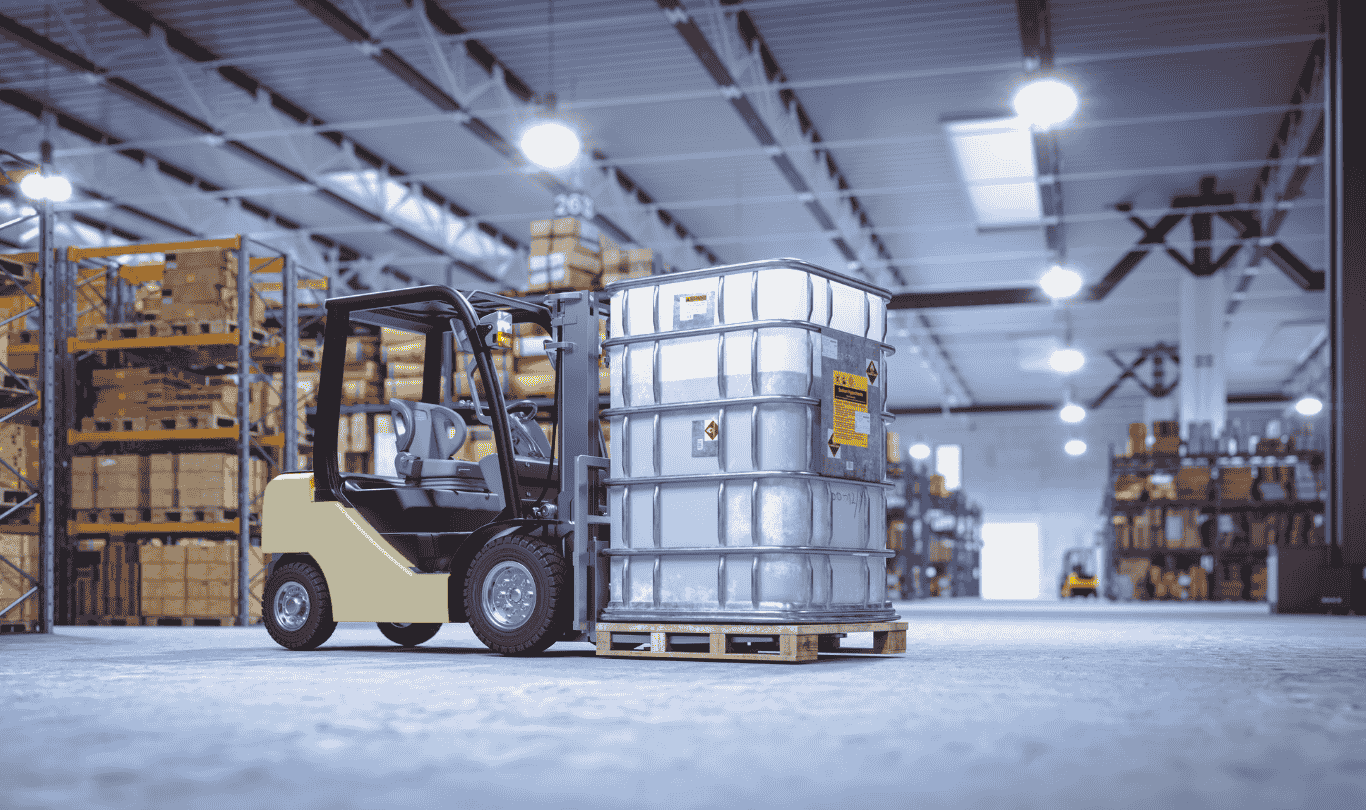
مرافق التخزين البارد
A Comparison Table Buyers Can Actually Use
| Decision Area | Outdated Warehouse Approach | Modern Warehouse Solutions Approach | Why It Matters |
|---|---|---|---|
| Space Use | Add racks until the building “looks full” | Match rack type and layout to SKU depth, access frequency, and travel flow | Converts square meters into usable capacity |
| Labor | Solve delays by adding people | Reduce touches, travel, and reshuffles through layout and equipment fit | Improves productivity without brute-force hiring |
| السلامة | Separate safety from layout decisions | Treat safety, ergonomics, and traffic paths as part of system design | Lowers injury and incident exposure |
| Growth | React only after bottlenecks appear | Plan modular solutions for future throughput and expansion | Avoids constant reactive redesign |
| Technology | Add software later if needed | Build solutions that can support automation and visibility from the start | Makes future upgrades easier |
| Cold-Chain or Specialized Storage | Chase density only | Balance density with flow, staging discipline, and environmental constraints | Prevents bottlenecks from hiding inside “efficiency” |
That table may look simple, but it tells the real story: a warehouse is not judged by how much it can hold. It is judged by how well it can receive, store, pick, replenish, and ship without tripping over itself.
Why One-Stop Solutions Are Becoming More Relevant
One of the biggest changes in warehousing is that isolated improvements are delivering smaller returns. A nice rack system with poor staging logic still underperforms. Good forklifts with weak slotting still waste time. Better software on top of bad aisle logic just gives you more accurate reports about the same mess.
That is why Akuros has leaned so hard into the one-stop idea. Its 2026 article One-Stop Warehouse Solutions: Optimizing Your Warehouse Operations in 2026 argues that businesses need integrated storage, handling, process design, and scalability rather than disconnected upgrades. That is not just branding language. It reflects what the best-performing facilities are already learning the expensive way.
The logic is straightforward:
- storage design affects travel time
- travel time affects labor cost
- labor cost affects throughput reliability
- throughput reliability affects customer performance
- and all of it gets worse when each decision is made separately
That is why modern warehouse solutions are becoming less about “products” and more about orchestration.
Cold-Chain Is the Stress Test for Bad Warehouse Design
If a normal warehouse exposes bad planning slowly, cold-chain exposes it immediately.
Akuros’ February 8, 2026 article One-Stop Warehouse Solutions for Cold-Chain: Density Without Bottlenecks explains this unusually well. It notes that in temperature-controlled facilities, every extra aisle costs energy, every extra touch adds dwell time, and congestion near doors quietly destroys throughput. It also argues that the goal is not maximum density, but maximum usable density—density that still ships on time.
That framing is strong because it captures a broader truth that applies beyond cold storage too. Any warehouse that pursues density without flow discipline usually ends up with more pallets on paper and less performance in practice.
A few cold-chain-specific lessons generalize well to all warehouses:
- zone fast movers away from congestion
- separate replenishment travel from picking travel
- protect door and staging buffers with rules, not hope
- do not over-densify SKUs that do not actually have depth
- design layout around execution reality, not slide-deck diagrams
That is why cold-chain is not a niche section in this article. It is the warehouse equivalent of a lie detector.
How to Choose the Right Warehouse Solution for the Business You Actually Have
This is where generic advice becomes useless. The right solution depends on the warehouse you actually operate, not the one you wish you had.
Akuros’ article How to Choose the Right Warehouse Solutions for Your Business’ Unique Needs gets the opening principle right: warehouse solutions should start from business-specific needs, not from one fashionable system. It also notes that systems like double-deep racking, drive-in racking, and very narrow aisle layouts become powerful only when they match the actual storage and access profile.
A useful selection framework looks like this:
Start with the SKU truth table
Map velocity bands, pallet depth by SKU, replenishment frequency, and peak stress points.
Then look at access logic
Do you need direct access for many SKUs, or is dense storage appropriate for deeper inventory positions?
Then evaluate equipment and aisle rules
Do you have the truck type, turning behavior, and safety discipline to support the system you are considering?
Then pressure-test growth
Will the solution still work if order volume rises, SKU mix changes, or labor gets tighter?
A warehouse solution should fit the warehouse’s behavior, not just its dimensions.
Why Safety and Ergonomics Must Be Part of the Discussion
This part gets ignored until someone gets hurt or until the warehouse starts quietly losing speed because staff are working around avoidable risk.
OSHA says improper handling and storing of materials often result in costly injuries, and its warehousing overview notes that the most common injuries involve overexertion and incidents with powered industrial trucks and other material-handling equipment. OSHA also began inspections under its National Emphasis Program on Warehousing and Distribution Center Operations in October 2023, which is not exactly the kind of detail that screams “relax, nothing matters.”
That means a serious warehouse solution should do more than increase capacity. It should help reduce:
- awkward reaching and repetitive handling
- unsafe stacking or unstable flow around docks
- unnecessary crossing between people and vehicles
- travel patterns that create avoidable fatigue
- congestion that increases near-miss events
A solution that improves storage but worsens handling strain is not modern. It is just rearranged trouble.
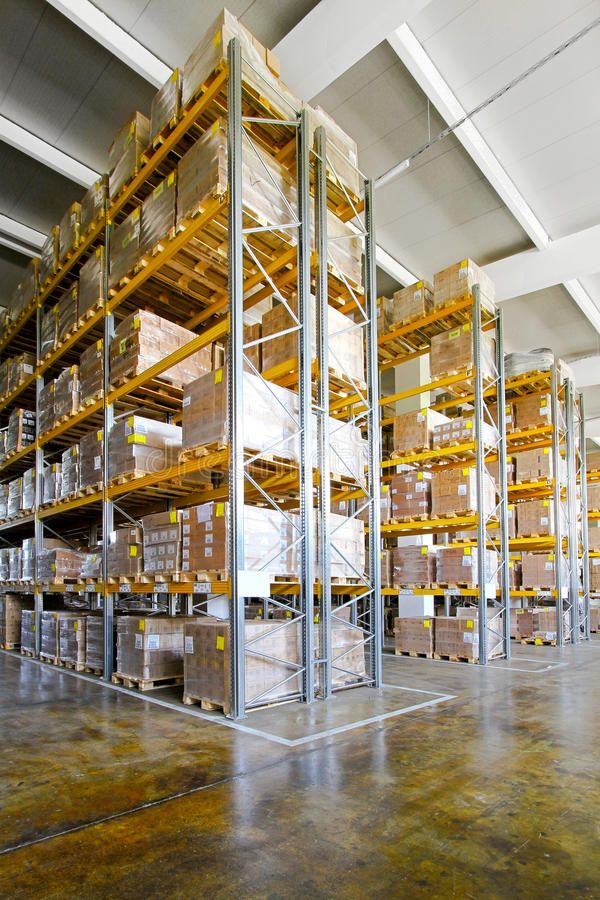
حلول المستودعات
Where Akuros Fits in the 2026 Warehouse Conversation
Akuros’ site structure is actually doing something smart: it treats warehouse solutions as a content ecosystem rather than a single landing page floating in isolation.
The About page frames the company as a one-stop planning, consulting, sales, and leasing provider. The warehouse solution page emphasizes customizability. Its 2026 articles cover general logistics operations, one-stop optimization, cold-chain density, and business-specific selection logic. That combination matters because buyers do not only need products. They need decision support.
Its related article One-Stop Warehouse Solutions: How to Optimize Your Warehouse Operations in 2026 reinforces the same direction: treating storage, movement, and process efficiency as one integrated operational system. That kind of consistency is usually a good sign. It suggests the company understands that warehouses fail in the handoff points between decisions, not only in the decisions themselves.
And that is the real value of a guide like this. A warehouse solution is not supposed to make a building look tidy in drone photos. It is supposed to make the operation more profitable, more scalable, and harder to break under pressure.
Five Questions Buyers Commonly Ask About Warehouse Solutions
What are warehouse solutions in simple terms?
Warehouse solutions are integrated systems that improve how goods are stored, moved, picked, replenished, and shipped. They can include racking layout, handling equipment, process design, safety planning, and sometimes automation or digital tools. The goal is not just more storage, but better operational performance.
How do modern warehouse solutions improve efficiency?
They improve efficiency by reducing wasted movement, shortening travel paths, increasing usable storage density, improving inventory access, and aligning equipment with workflow. In many facilities, the biggest gains come from better layout logic rather than simply adding labor or buying more storage hardware.
Are one-stop warehouse solutions better than buying equipment separately?
They often are, especially for businesses dealing with growth, complexity, or recurring bottlenecks. A one-stop approach helps align storage design, handling flow, and implementation logic so the warehouse performs as a system instead of as disconnected pieces.
What is the biggest mistake companies make when upgrading a warehouse?
One of the biggest mistakes is choosing a storage system before understanding SKU behavior, replenishment patterns, and travel flow. High density sounds attractive, but it can create reshuffles, congestion, and slower execution if it is applied to the wrong inventory profile.
Do warehouse solutions matter more in cold-chain facilities?
Yes, because cold-chain punishes wasted space, excess movement, and congestion more aggressively. Every extra aisle affects energy use, and every extra touch can affect dwell time and throughput. But the same core lesson applies to any warehouse: density without flow discipline is not efficiency.
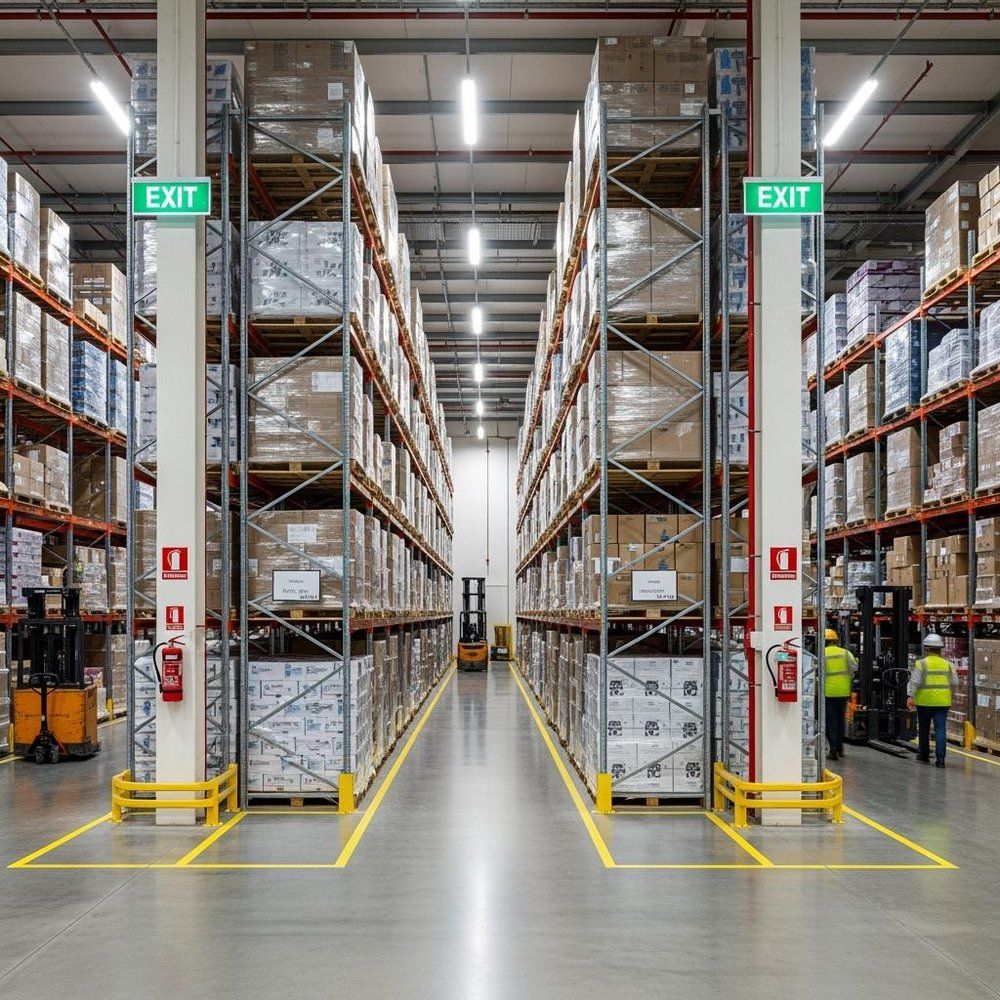
Warehouse Solutions Provider
The Best Warehouse Solutions Solve the Right Problem First
At the beginning of this article, the warehouse team thought they had a space problem. What they really had was a usability problem.
That is the heart of modern حلول المستودعات. The best systems do not just add pallet positions or make the floor look more organized. They solve the real bottlenecks underneath the complaint: too much travel, poor access, weak staging discipline, unnecessary handling, rising labor strain, and growth without structure.
That is why the future of warehousing belongs to integrated solutions rather than isolated upgrades. Industry investment trends, automation momentum, safety pressure, and specialized operating environments are all moving in the same direction: better orchestration, better fit, and better decision-making.
And that is also why the most sensible next step is not to guess. It is to map the operation you actually run, identify where usable capacity is leaking away, and then اتصل بأكوروس for a solution discussion grounded in layout, flow, and real business needs. Because in 2026, the question is no longer whether warehouse solutions matter. The real question is how long a business can afford to run without the right one.
المراجع
- Akuros official materials, including the About page, Warehouse Solution page, and its 2026 warehouse-solution articles.
- MHI and Deloitte 2025 industry report announcement on supply chain technology investment trends.
- OSHA warehousing overview and hazards guidance.
- OSHA Materials Handling and Storage publication.
- DHL analysis on warehouse robotics and automation trends.
- GCCA overview of the cold-chain industry and warehouse specialization.
- GCCA Cold Facts coverage of cold-storage expansion and high-density pallet positions.
- DHL Logistics Trend Radar and automation-related logistics outlook.
- OSHA ergonomics overview for reducing fatigue and work-related MSD risk.
- MHI annual industry reports overview and MODEX 2026 industry context.