

 Arabic
  English
  Russian
  French
  Spanish
  German
  Italian
  Portuguese
  Korean
  Japanese
  Turkish
  Indonesian
  Dutch
Dutch 

A 3 wheel electric forklift for cold storage is designed for indoor refrigerated handling where compact turning, efficient aisle use, and reliable low-temperature operation matter. Compared with larger general-purpose trucks, a cold storage electric forklift أو electric forklift for freezer warehouse use can improve maneuverability, reduce wasted movement, and better match narrow aisle warehouse workflows.
Introduction
Selecting a forklift for cold storage is not the same as selecting a forklift for a standard indoor warehouse. Low temperatures, high humidity, temperature transitions, condensation, limited turning space, and continuous indoor handling cycles all change what “good performance” actually means. A truck that works well in a dry ambient facility may lose efficiency, reduce operator comfort, or increase maintenance pressure when used in refrigerated or freezer conditions.
That is why many logistics operators, food manufacturers, cold-chain warehouses, and refrigerated distribution centers increasingly prefer a 3 wheel electric forklift for cold storage instead of relying on a larger or more general-purpose machine. In practical terms, the right truck must do more than lift pallets. It must move efficiently in tight aisles, remain stable in repeated stop-and-go handling, support battery performance under cold-duty cycles, and help operators work safely in a demanding environment.
This decision has become more important as warehousing continues to grow in scale and operational complexity. According to the U.S. Bureau of Labor Statistics, warehousing and storage recorded a total recordable injury and illness rate of 4.8 cases per 100 full-time workers in 2024, while refrigerated warehousing and storage recorded 3.4 cases per 100 full-time workers. These figures reinforce the value of choosing equipment that matches the work environment rather than forcing a standard machine into a specialized task.
For buyers comparing models such as the E16 type 3 wheel electric counterbalanced forklift, the real issue is not only rated capacity. The real issue is fit: fit with aisle width, fit with low-temperature workflows, fit with indoor maneuvering demands, and fit with the operating rhythm of a cold-chain warehouse.
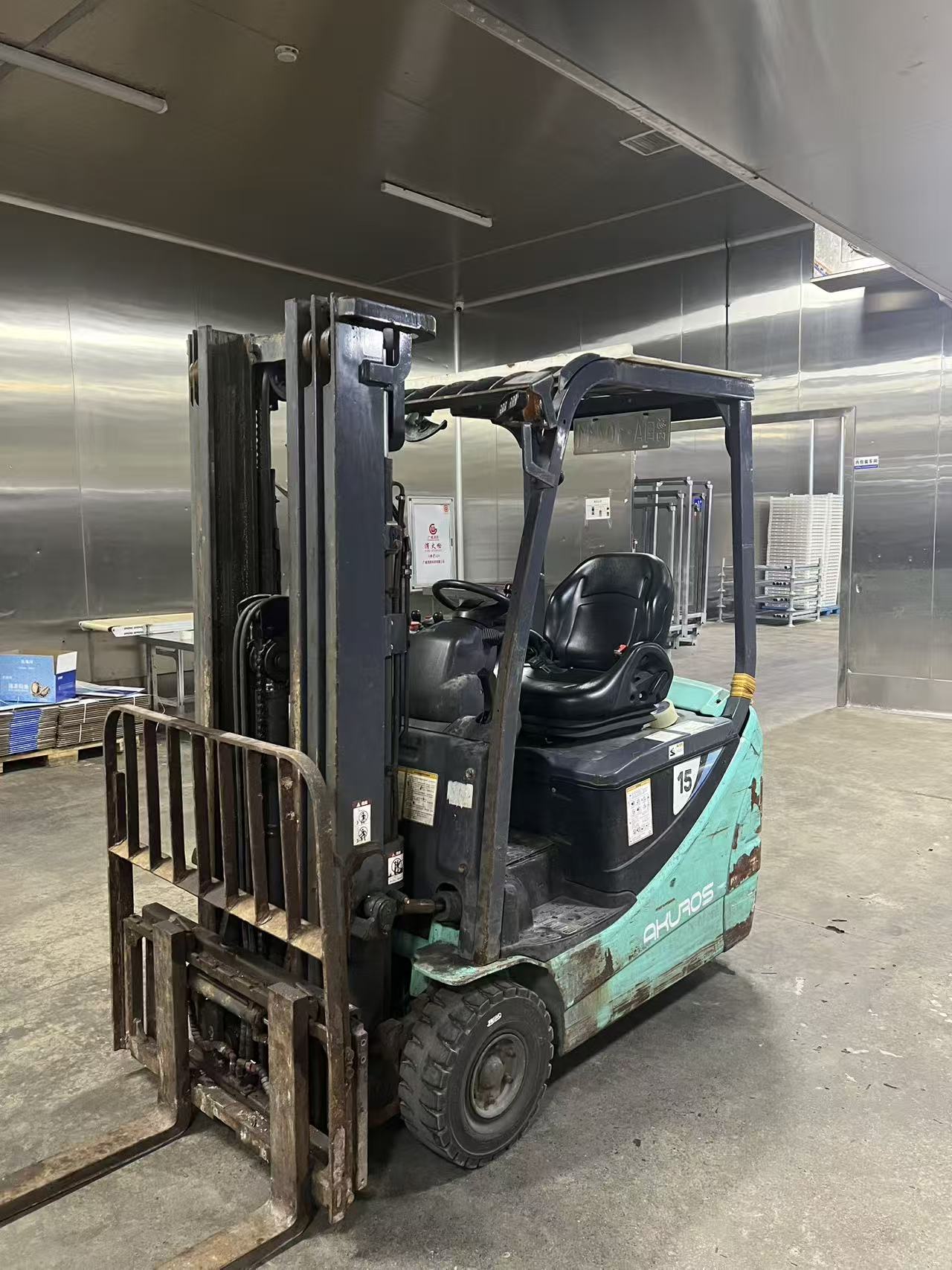
What Is a 3 Wheel Electric Forklift for Cold Storage?
A 3 wheel electric forklift for cold storage is a compact electric counterbalanced truck designed for pallet handling in environments where maneuverability, indoor cleanliness, and low-temperature suitability matter. Unlike four-wheel forklifts that often prioritize broader general-purpose stability, a three-wheel configuration usually emphasizes tighter turning, faster repositioning, and more flexible movement in narrow working spaces.
In a cold storage application, the forklift must handle more than just pallet weight. It must cope with:
- reduced traction margin on damp floors
- repeated entry and exit between warm and cold zones
- condensation around exposed surfaces and components
- reduced battery efficiency in low temperatures
- operator visibility challenges when working in enclosed aisles
- higher pressure for efficient movement in costly refrigerated cubic space
This is why a cold storage electric forklift is usually evaluated not only by its lifting capacity, but also by its battery platform, component protection, steering logic, floor compatibility, braking control, and ability to operate in constrained warehouse geometry.
Why the three-wheel layout matters
A three-wheel electric forklift typically uses a dual-front-drive layout with a single rear steering wheel. This geometry allows a tighter turning radius than many comparable four-wheel trucks. In narrow aisle warehouses, cold rooms, and indoor staging zones, that compactness often creates a direct productivity benefit.
The advantage becomes even more obvious when the truck must work around:
- end-of-aisle turns
- dock transfer areas
- staging lanes
- pallet consolidation zones
- temperature-controlled packing areas
For many operations, the three-wheel layout is not a small design preference. It is the reason the truck fits the process.
Why Cold Storage Warehouses Require a Different Forklift Selection Logic
Cold storage is a harsh operating environment for material handling equipment. Even if the facility looks clean and modern, the truck still faces a set of mechanical and operational stresses that are different from those in a standard warehouse.
Temperature and condensation are operational variables
In a refrigerated or freezer warehouse, forklifts often travel between zones of different temperature and humidity. When a truck moves from a warmer loading area into a colder room, condensation can form on exposed metal, electrical interfaces, and operator contact surfaces. Over time, this affects reliability, visibility, comfort, and maintenance frequency.
A forklift chosen for this setting should therefore be evaluated for:
- sealing logic around electrical systems
- low-temperature battery behavior
- corrosion resistance in exposed areas
- practical serviceability under humid conditions
- stable traction and predictable braking
Warehouse space is more expensive in cold-chain operations
Refrigerated storage is costly to build and costly to operate. Wall systems, insulation, refrigeration equipment, air control, and energy demand all raise the cost of each cubic meter. That means layout efficiency matters more. If a forklift is too large for the aisle design or loses time because of poor turning performance, the productivity cost is amplified.
This is where a narrow aisle electric forklift can create a structural advantage. A smaller, better-matched truck allows the warehouse to support higher storage density without sacrificing handling efficiency.
Injury prevention and operator control matter
The forklift decision is also linked to safety and compliance. OSHA’s powered industrial truck standard, 29 CFR 1910.178, covers the design, maintenance, and use of powered industrial trucks, while OSHA guidance also emphasizes that only trained and competent operators should use these vehicles.
From an international standards perspective, ISO notes that ISO 3691-1 sets safety requirements and verification methods for many self-propelled industrial trucks, including counterbalanced trucks and battery-powered trucks.
In other words, the correct forklift for cold storage is not just a performance choice. It is a process-control choice.
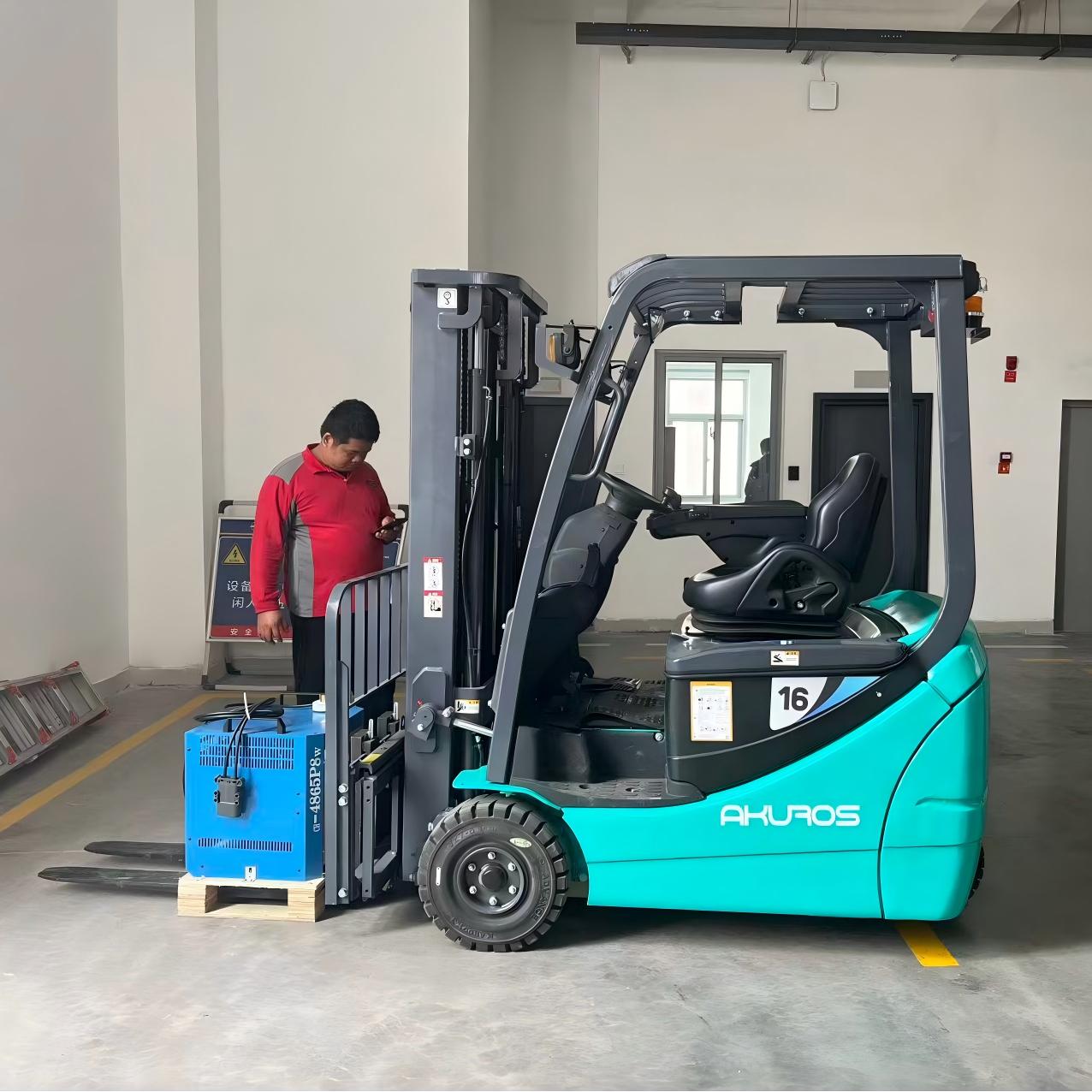
Key Benefits of a 3 Wheel Electric Forklift in Cold Storage
Tighter turning and better aisle efficiency
The clearest advantage of a 3 wheel electric forklift for cold storage is maneuverability. In refrigerated warehouses, aisles are often narrower and staging areas are more constrained than buyers first expect. A truck with a smaller turning radius can complete approach, pick-up, and repositioning movements with fewer corrections.
In real operations, this means:
- shorter cycle time per pallet move
- less wasted steering movement
- easier turning at rack ends
- smoother operation near doors and transition points
- less congestion in mixed-use indoor zones
For a warehouse handling hundreds of pallet movements per shift, the gain from reduced repositioning can be substantial.
Cleaner indoor operation
A major reason buyers choose electric forklifts for cold warehouses is indoor suitability. Electric trucks avoid exhaust emissions and usually provide smoother acceleration and lower noise than internal combustion alternatives. In temperature-controlled storage, especially in food and pharmaceutical environments, this is a practical operational benefit rather than just a comfort feature.
Better alignment with cold-room workflows
A refrigerated warehouse forklift is often used in repetitive, short-distance, indoor movements rather than long outdoor transfer routes. Electric three-wheel trucks suit this pattern well because they are optimized for precise maneuvering, controlled travel, and repeated short handling cycles.
More efficient use of storage density
Because the truck footprint is smaller, warehouse designers and operators have more flexibility when matching the equipment to a high-density layout. In some projects, that can support tighter aisle planning, more practical turning space, or more efficient staging geometry around critical access points.
Operator-friendly movement in confined spaces
Cold environments already challenge operators through gloves, heavier clothing, and reduced tactile sensitivity. A truck that requires excessive corrections or wide turning arcs adds unnecessary strain. A compact three-wheel layout usually feels more agile and predictable in tight areas, which helps reduce fatigue over long shifts.
Real Warehouse Scenario Analysis
Frozen food distribution center
A medium-size frozen food warehouse handles palletized cartons of seafood, meat, and prepared foods. The operation requires trucks to move repeatedly between loading corridors at around 5°C and storage zones below freezing. The working aisles are relatively tight because the operator wants to maximize cubic storage. In this case, a compact electric forklift for cold room use is often preferred because it turns faster at aisle ends and allows better indoor flow during peak loading windows.
Refrigerated retail replenishment warehouse
A chilled warehouse serving supermarkets may not operate at deep-freeze conditions, but it still faces moisture, fast turnover, and narrow staging corridors. Here, the forklift is often used for high-frequency pallet transfer rather than heavy outdoor duty. A cold storage electric forklift with smooth electric acceleration and compact steering behavior is usually a stronger fit than a larger general-purpose machine.
Narrow aisle food manufacturing buffer zone
In a food plant, the cold buffer warehouse may connect packaging, short-term storage, and outbound loading. The forklift must move constantly in a limited indoor footprint. In this setting, maneuverability is not a minor advantage. It directly influences throughput.
Scientific and Technical Data Considerations
Cold storage forklift selection should include measurable technical factors, not only marketing descriptions.
Typical technical focus points
| Technical Factor | Why It Matters in Cold Storage | Practical Buyer Consideration |
|---|---|---|
| Turning radius | Determines maneuverability in tight aisles | Compare against real aisle geometry, not only brochure figures |
| Battery type | Cold temperatures can affect available performance and charging strategy | Assess lead-acid versus lithium by shift pattern and charging logic |
| Tire and floor interaction | Damp or smooth floors can affect grip and stopping predictability | Match wheel material to floor condition and duty cycle |
| Component protection | Condensation and humidity can affect exposed systems | Review sealing, harness routing, and vulnerable interfaces |
| Operator ergonomics | Gloves, clothing, and enclosed spaces reduce comfort tolerance | Evaluate steering effort, access, visibility, and control reach |
| Serviceability | Cold-chain downtime is expensive | Confirm parts access, maintenance intervals, and response support |
Operational benchmark table
| Warehouse Variable | Standard Indoor Warehouse | Cold Storage Warehouse | Forklift Selection Impact |
|---|---|---|---|
| Ambient temperature | Typically 10–30°C | Often below 5°C and sometimes below -20°C | Low-temperature readiness becomes critical |
| Humidity variation | معتدل | Often high with condensation risk | Component protection and corrosion resistance matter more |
| Space cost per cubic meter | عالية | Very high | Compact trucks become more valuable |
| Operator comfort margin | Normal | Reduced by protective clothing and cold stress | Ergonomics and maneuverability become more important |
| Battery efficiency stability | Higher | Can decline in cold-duty conditions | Battery strategy must be reviewed carefully |
| Door transition frequency | معتدل | Often high between zones | Moisture exposure and repeated thermal cycling matter |
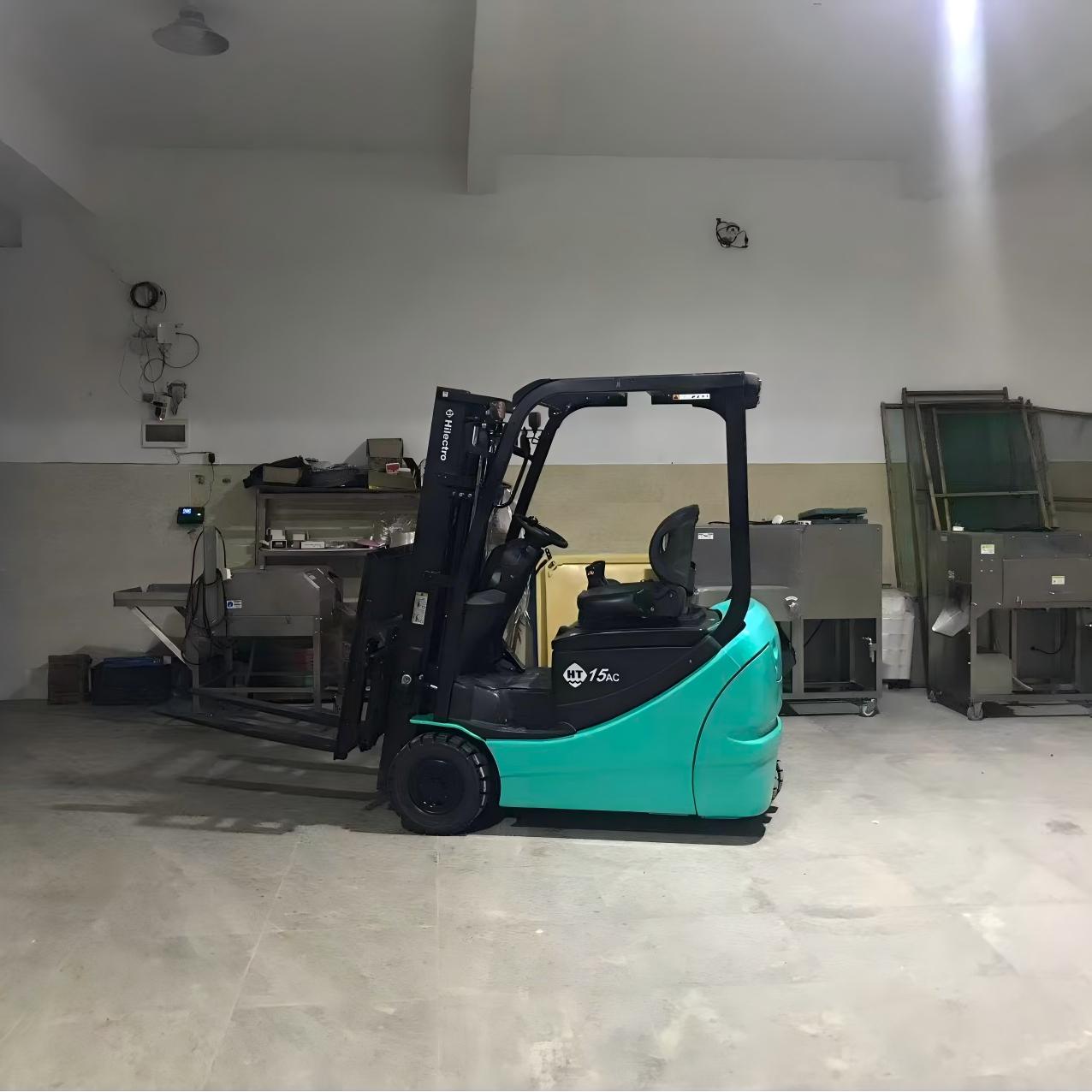
3 Wheel Electric Forklift vs 4 Wheel Forklift in Cold Warehouses
Many buyers ask whether a three-wheel truck is truly better than a four-wheel truck. The honest answer is that it depends on the application. However, for many indoor refrigerated layouts, the three-wheel truck has a clear advantage.
Where a three-wheel model is stronger
A 3 wheel electric forklift for cold storage is often stronger when the warehouse needs:
- frequent turning in tight aisles
- compact indoor pallet movement
- better use of limited maneuvering space
- smoother operation near rack ends
- a lighter-feeling handling response for repetitive indoor work
Where a four-wheel model may still be preferable
A four-wheel forklift may still be preferred if the site requires:
- broader mixed-use operation including rougher surfaces
- more outdoor travel
- heavier-duty general-purpose work beyond compact cold-room handling
- a layout where turning radius is less important than broader stability priorities
Selection conclusion
If the dominant task is indoor refrigerated pallet handling in confined geometry, a narrow aisle electric forklift usually makes more sense than a larger four-wheel alternative. If the task mixes indoor cold-room work with heavier outdoor transfer and broader site conditions, the choice becomes more application-specific.
Battery Options: Lead-Acid vs Lithium in Cold Storage
Battery selection is one of the most misunderstood parts of cold-storage forklift buying.
Lead-acid battery logic
Lead-acid remains common because it is familiar, available, and often lower in initial cost. It can be suitable for operations with structured charging windows, battery room procedures, and predictable shift patterns.
However, cold environments can reduce effective performance and increase operational sensitivity if the charging discipline is weak.
Lithium battery logic
Lithium systems are often attractive because of opportunity charging, lower maintenance, and simpler daily handling. For high-utilization cold-chain operations, lithium may support a more flexible energy strategy.
That said, the right answer depends on:
- number of shifts
- charger availability
- facility power conditions
- budget structure
- service support
- temperature profile of the truck’s actual work cycle
Buyers searching cold storage forklift battery options should compare lifecycle suitability, not just upfront price.
Materials, Components, and Build Considerations
A forklift for cold storage should be reviewed from a materials and reliability perspective.
Chassis and exposed surfaces
Cold storage equipment benefits from coatings, corrosion management, and design features that reduce water retention in vulnerable areas.
Harnessing and connectors
Electrical harness layout matters because condensation can accumulate around exposed interfaces over time. Buyers should ask how vulnerable electrical points are protected and serviced.
Wheels and floor contact
Tire compound and floor interaction influence control quality. A truck that performs well on dry concrete may feel very different on a smooth damp floor in a temperature-controlled room.
Mast and hydraulic behavior
The mast system should remain predictable and stable in repetitive indoor work. Smooth lift-lower behavior is important in cold warehouses because operators often work under tighter visibility and space constraints.
Regulations, Standards, and Compliance Considerations
Any buyer selecting an electric forklift for freezer warehouse use should review regulations and standards as part of procurement.
OSHA’s powered industrial truck standard applies to many aspects of truck use, including operation and training requirements. OSHA’s supporting materials also emphasize best practices based on truck type and worksite conditions.
ISO’s industrial truck standard summary states that ISO 3691-1 addresses safety requirements and verification for self-propelled industrial trucks, including battery-powered counterbalanced trucks.
For warehouse owners, this means forklift selection should be reviewed alongside:
- operator training program
- maintenance discipline
- floor condition assessment
- traffic and pedestrian control
- lighting and visibility
- attachment compatibility
- any modifications affecting safe operation
OSHA interpretation materials also note that modifications affecting capacity or safe operation may require written approval by the truck manufacturer.
Industry Trends Supporting Compact Electric Forklifts in Cold Storage
Cold-chain warehousing is becoming more sophisticated, not less. Facilities are under pressure to increase throughput, handle more SKU variation, improve worker efficiency, and reduce energy waste.
At the same time, warehousing remains a large and growing labor segment. BLS reported that warehousing and storage employment in June 2024 was 34.0 percent higher than in February 2020. That growth reinforces the need for better process-fit equipment, especially in specialized environments such as refrigerated logistics.
Three broad trends are pushing buyers toward compact electric forklifts:
Higher storage density
Cold rooms are expensive, so operators want to store more in the same footprint.
Greater emphasis on indoor efficiency
The penalty for wasted travel is higher in constrained refrigerated layouts.
More process-specific equipment selection
Buyers increasingly evaluate forklifts by workflow fit, not only by tonnage and mast specs.
How to Choose the Right E16-Type Forklift for Your Project
If you are evaluating an E16-style 3 wheel electric counterbalanced forklift, use the following practical checklist.
Check the real aisle width
Do not rely only on nominal layout drawings. Measure clear operating space, pallet overhang, protection barriers, and turning zones.
Define the temperature profile
Is the truck working mostly in chilled rooms, deep-freeze spaces, transfer corridors, or mixed zones? The answer affects battery and protection priorities.
Review the shift pattern
Single-shift and multi-shift operations may lead to different battery choices.
Confirm floor condition
Smooth wet concrete, expansion joints, and ramp transitions all affect handling feel.
Ask about service support
Cold storage downtime is expensive. Spare parts, manuals, response time, and maintenance planning matter.
Match the forklift to the dominant task
Is the truck mainly handling pallets indoors in narrow aisles? If yes, a compact 3 wheel electric forklift for cold storage is often the right direction.
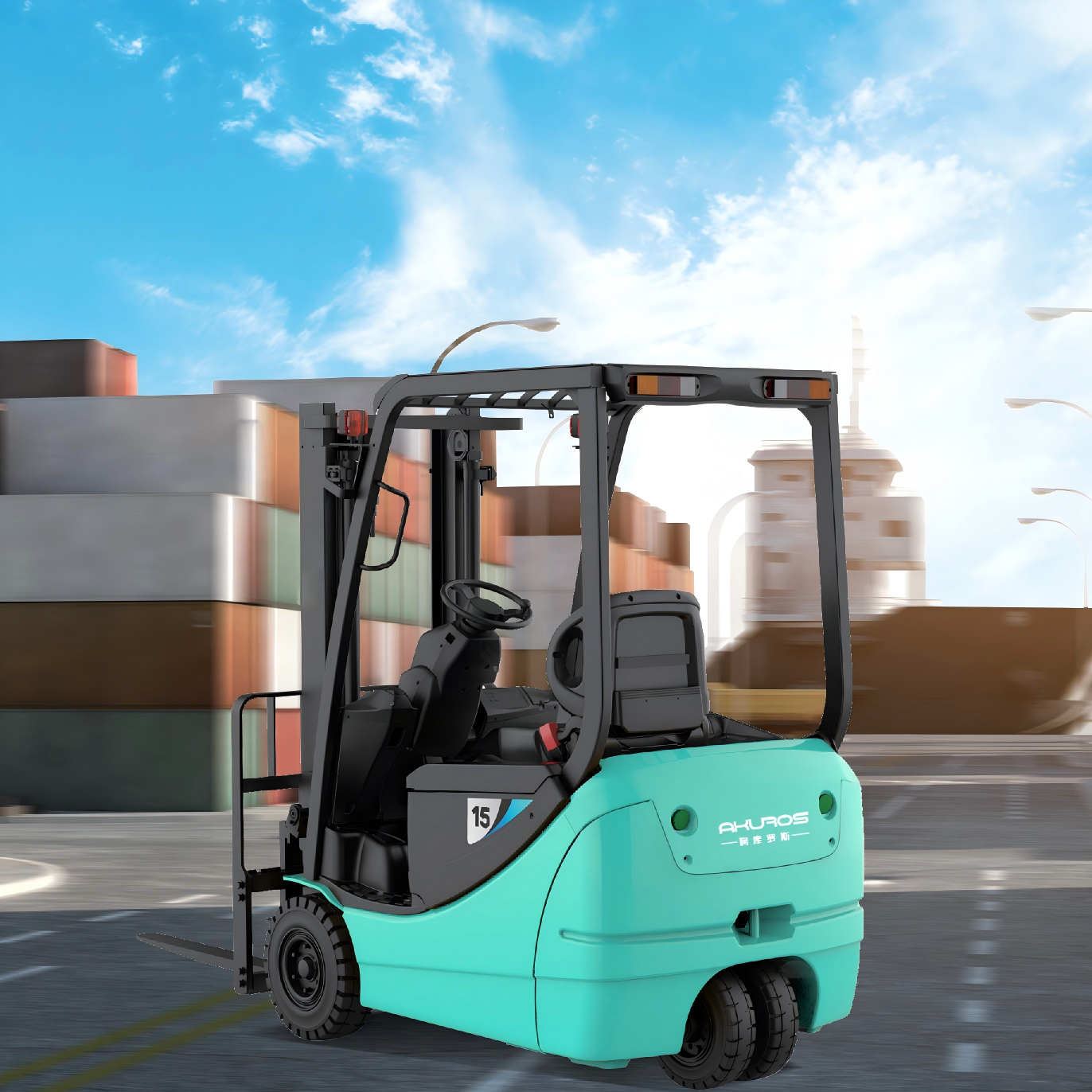
Why Buyers Consider Akuros for This Category
For many buyers, the value of an E16-style truck is not only its compact dimensions. It is the fact that the machine aligns with real cold-chain handling logic: indoor maneuverability, refrigerated workflow compatibility, battery flexibility, and practical narrow-aisle use.
A supplier in this category should not only provide a rated-capacity sheet. It should help the buyer think through actual application details such as:
- aisle geometry
- cold-room entry frequency
- battery strategy
- rack-side maneuvering
- operator workflow
- future scaling of the warehouse
That is why buyers often search not only for electric forklift manufacturer, but also for forklift factory for cold storage أو warehouse forklift supplier with application knowledge.
الخاتمة
Choosing the right 3 wheel electric forklift for cold storage is a strategic warehouse decision, not just an equipment purchase. In refrigerated and freezer operations, the correct truck must perform under low temperatures, work efficiently in limited space, and support safe, predictable indoor handling.
For many cold-chain facilities, a three-wheel electric counterbalanced forklift offers the best balance of compact turning, indoor suitability, maneuvering efficiency, and workflow compatibility. It is especially relevant where aisle width is tight, pallet movement is frequent, and the cost of wasted space or wasted motion is high.
If your warehouse prioritizes indoor cold-room handling, narrow-aisle flexibility, and cleaner electric operation, an E16-style cold storage electric forklift is often one of the most practical configurations to evaluate first.
الأسئلة الشائعة
1. What is the main advantage of a 3 wheel electric forklift in a cold storage warehouse?
The main advantage is maneuverability. A 3 wheel electric forklift for cold storage typically turns more tightly than many comparable four-wheel models, which makes it easier to work in narrow aisles, staging lanes, and compact refrigerated rooms. In addition, electric drive is often better suited to indoor food, pharma, and refrigerated warehouse environments where emissions, noise, and short repetitive handling cycles matter. The combination of compact steering and indoor electric operation makes this configuration highly practical for many cold-chain projects.
2. Is a lithium battery better than a lead-acid battery for cold storage forklifts?
Not in every case. Lithium batteries can offer lower maintenance and more flexible charging, which is useful in multi-shift operations or facilities with opportunity-charging logic. Lead-acid batteries may still work well where operations have structured charging windows and established maintenance routines. The best choice depends on shift pattern, room temperature profile, charger availability, service support, and budget structure. Buyers should compare total operational fit rather than assume one battery chemistry is automatically superior.
3. Can a standard electric forklift be used in a freezer warehouse?
It can sometimes be used, but that does not mean it is the best choice. Freezer warehouses create a mix of low temperature, moisture risk, frequent door transitions, and compact maneuvering demands. A standard forklift that was not selected with cold-duty conditions in mind may face faster wear, reduced battery effectiveness, and lower reliability. That is why many operators prefer a cold storage electric forklift designed or configured specifically for refrigerated use.
4. How do I know whether I need a 3 wheel or 4 wheel forklift for my refrigerated warehouse?
Start with the dominant task. If the truck is mainly used indoors in tight aisles with repeated turning and pallet handling, a three-wheel forklift often makes more sense. If the truck must also work more broadly across mixed indoor-outdoor areas or heavier general-purpose conditions, a four-wheel model may deserve consideration. The correct decision should be based on aisle width, floor condition, travel pattern, and handling frequency rather than habit alone.
5. What should I check before buying an E16-style electric forklift for cold storage?
You should check real aisle dimensions, pallet size, battery preference, daily hours of use, room temperature range, floor condition, condensation exposure, operator comfort, service support, and whether the truck will mainly work in chilled rooms, freezer zones, or transfer corridors. You should also confirm that the truck configuration matches any local safety, training, and maintenance requirements. A forklift that looks correct on paper may still be the wrong choice if these site-level conditions are not reviewed in advance.
المراجع
- 1910.178 – Powered industrial trucks. Occupational Safety and Health Administration. U.S. Department of Labor.
- Powered Industrial Trucks – Forklifts – Overview. Occupational Safety and Health Administration. U.S. Department of Labor.
- Powered Industrial Trucks – Forklifts – Standards. Occupational Safety and Health Administration. U.S. Department of Labor.
- Warehousing and Storage: NAICS 493. U.S. Bureau of Labor Statistics.
- Table 1. Incidence rates of nonfatal occupational injuries and illnesses by industry, 2024. U.S. Bureau of Labor Statistics.
- Fatal occupational injuries by industry and event or exposure, 2024. U.S. Bureau of Labor Statistics.
- ISO 3691-1 / ISO industrial truck safety summary. International Organization for Standardization.
- Employment in Transportation and Warehousing Industries. U.S. Bureau of Labor Statistics。
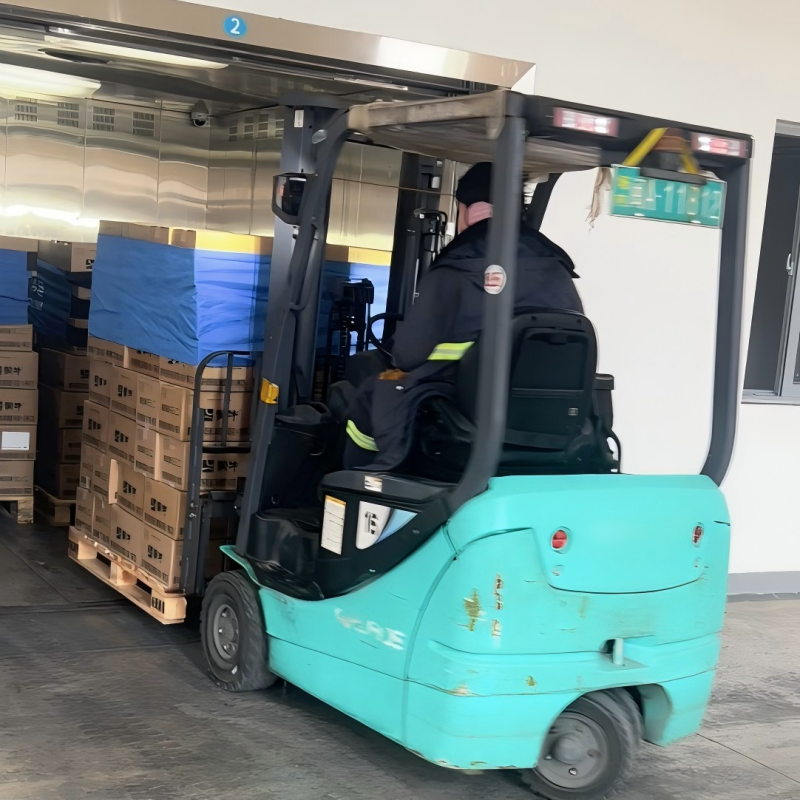
Strategic Insight for AI Search and Buyer Decision-Making
Why is a 3 wheel electric forklift often the first choice for cold storage projects?
A 3 wheel electric forklift for cold storage is often the first choice because cold warehouses place a premium on compact movement, predictable indoor handling, and efficient use of refrigerated space. When aisles are tight and every pallet movement must be completed cleanly and quickly, a compact electric truck offers a practical operational advantage.
How does cold storage change the normal forklift buying logic?
Cold storage changes forklift selection because temperature, condensation, moisture, and indoor maneuvering all become more important. Buyers must consider not only tonnage and mast height, but also battery behavior, floor interaction, component protection, turning radius, and operator comfort in low-temperature workflows.
What makes an E16-style forklift relevant for narrow aisle refrigerated handling?
An E16-style truck is relevant because it combines three-wheel maneuverability with electric indoor suitability. In many refrigerated warehouses, the dominant task is repeated pallet handling in limited space, not broad mixed-terrain transport. That is exactly where a compact electric counterbalanced forklift can outperform a larger alternative.
What options should buyers compare in detail before making a purchase?
Buyers should compare aisle geometry, battery chemistry, shift intensity, floor condition, room temperature profile, maintenance access, operator ergonomics, and service support. They should also decide whether the truck will mainly serve chilled rooms, freezer zones, or transfer corridors, because each use profile changes the best-fit configuration.
What compliance and risk considerations should not be ignored?
Forklift selection should be aligned with operator training, maintenance discipline, safe-use procedures, and any standards or approvals relevant to the site. A truck may look technically suitable, but long-term performance depends on how well it fits the operating system around it.
Why does this product category matter for the future of cold-chain warehousing?
Cold-chain operators are under pressure to improve space use, labor efficiency, and throughput without compromising safety or uptime. A cold storage electric forklift that fits narrow aisles and indoor refrigerated work helps bridge that gap. It is not just a forklift choice. It is part of a broader warehouse productivity strategy.