

 Arabic
  English
  Russian
  French
  Spanish
  German
  Italian
  Portuguese
  Korean
  Japanese
  Turkish
  Indonesian
  Dutch
Dutch 

“Is our pallet truck holding us back or helping push operations forward?”
The warehouse supervisor stood beside a busy dock door, watching forklifts and hand trucks jockey for position. Orders were building, staff were hustling, but something wasn’t flowing as smoothly as it should. One loader was stuck waiting because the pallet truck couldn’t reach deep into the racking. Another was slowed in the cold storage area where condensation made wheels slip. The team had the right intent — but not always the right equipment.
That’s when the operations manager said something most decision‑makers eventually discover:
“Choosing a pallet truck is not just about how much it lifts — it’s about how well it fits our warehouse.”
For warehouses that handle diverse tasks — from general storage to refrigerated docks — understanding how different pallet trucks perform in real usage conditions can make a huge difference in productivity, safety, and cost control.
That is the bigger picture behind selecting the right شاحنة منصات نقالة: it’s not merely about picking a model from a catalog, but about matching your handling needs, traffic flow, dock behavior, and equipment interaction to the right tool.
To start this journey, it’s useful to understand who we are talking about and why this matters. Akuros About positions itself not just as a hardware supplier, but as a solid partner in building warehouse systems that work — including pallet trucks, storage solutions, handling equipment, and overall material flow design.
PALLET TRUCK
Why Choosing the Right Pallet Truck Matters
Warehouses today are complex ecosystems. Goods enter at one end, are staged in the middle, and exit at another — often under tight timing and multi‑temperature conditions. From daily picking to peak‑season surges, the pallet truck becomes one of the most heavily used tools on the floor.
A poorly chosen pallet truck can cause:
-
Slower turnaround at docks
-
Bottlenecks in narrow aisles
-
Operator fatigue and safety risks
-
Increased maintenance costs
-
Uneven performance in different zones (e.g., cold storage)
But the right pallet truck can transform warehouse flow by:
-
Improving dock turnaround times
-
Reducing operator strain
-
Supporting diverse warehouse zones
-
Handling heavier loads reliably
-
Integrating smoothly with other handling equipment
That’s why this guide focuses not only on what pallet trucks are, but how to choose the right one given your warehouse’s unique conditions.
Understanding Different Types of Pallet Trucks
Before diving into selection, it’s essential to know the main categories of pallet trucks and where they fit:
شاحنات البليت اليدوية
These are simple, cost‑effective trucks that require human effort to move and lift pallets. They are suitable for:
-
Small warehouse areas
-
Low to moderate lifting demands
-
Zones where electric handling isn’t necessary
Manual trucks are easy to maintain but can strain operators when loads are heavy or distances are long.
Semi‑Electric Pallet Trucks
Semi‑electric models feature powered lifting but manual propulsion. They reduce physical strain while keeping costs moderate. They’re a good middle ground for warehouses that need more support than manual trucks but don’t have the traffic demands for full electric models.
شاحنات البليت الكهربائية
Fully electric pallet trucks use powered lifting and propulsion. These are ideal for:
-
High‑volume operations
-
Heavier loads
-
Long travel distances
-
Challenging environments such as cold storage
When talking about electric pallet truck performance in demanding environments like refrigerated warehouses, it’s important to look at real use cases.
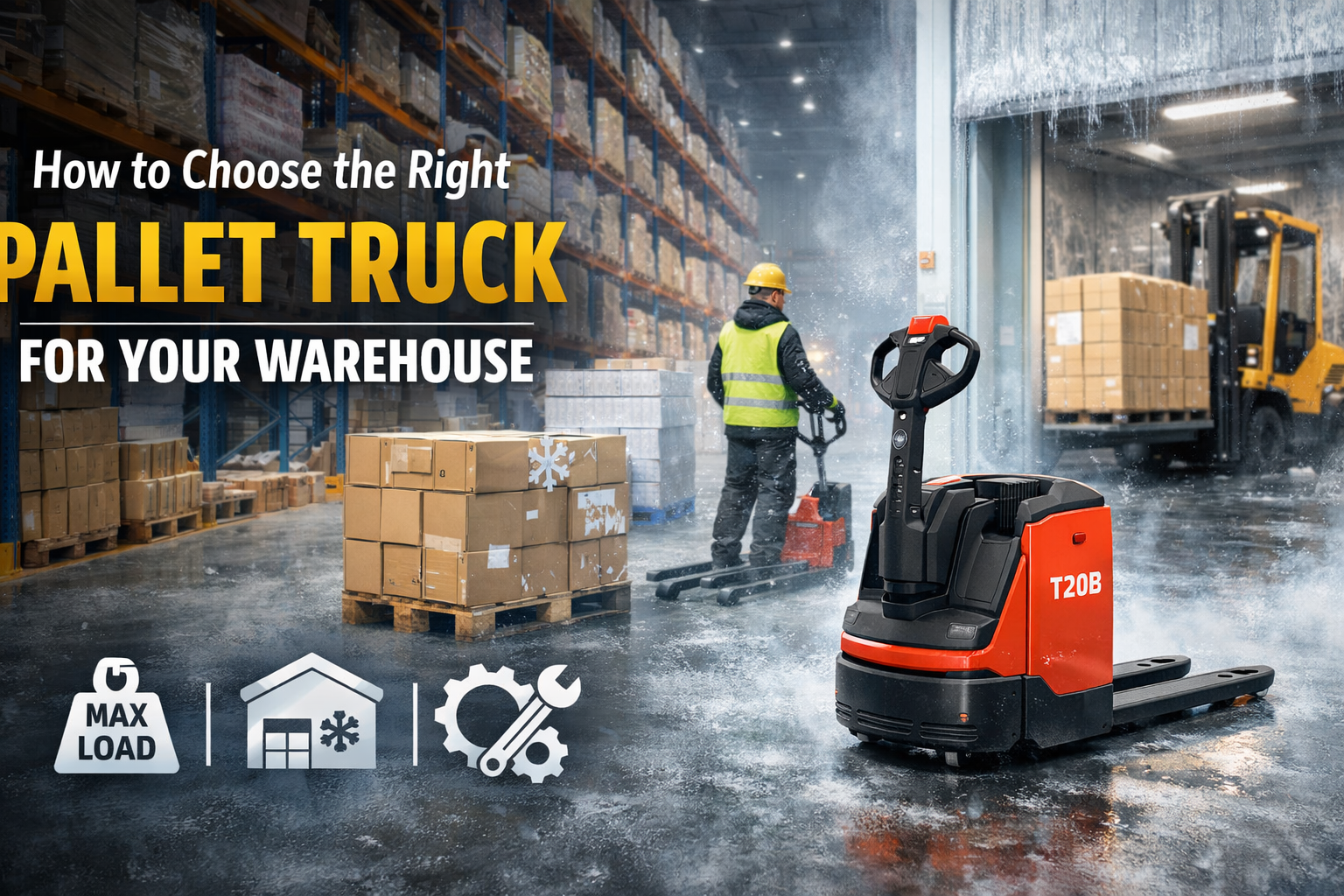
For example, the T20B electric pallet truck is highlighted for cold storage environments — offering consistent performance even in low temperatures. You can learn more from this case study on T20B Electric Pallet Truck for Cold Storage Warehouses.
How Different Warehouse Zones Impact Pallet Truck Choice
Not all warehouse spaces behave the same. Let’s walk through some real operational pressure points:
General Storage and Receiving
In a typical storage area with mixed SKUs and pallet sizes, the pallet truck must:
-
Navigate aisles cleanly
-
Provide reliable lift
-
Support frequent pick/put‑away cycles
The fork spacing, wheel type, and lifting height all influence how easily the pallet truck performs here.
Cold Storage and Refrigerated Zones
Cold storage warehouses present distinct challenges:
-
Condensation and slick floors
-
Low‑temperature impacts on batteries and electronics
-
Tight freezer doors and circulation racks
In these zones, a pallet truck must handle not just pallets, but environmental stress.
This is why articles like Why T20B Pallet Truck Is Essential in Cold Storage Warehouses و Why T20B Pallet Truck Is Critical for Cold Storage Dock Flow are crucial reading. They show how the right truck can maintain dock flow even when cold temperatures challenge equipment performance.
For many cold storage docks, it turns out that manual pallet handling is still preferred over full automation, especially when reliability, simplicity, and flexibility matter most. This insight is reinforced in Pallet Truck vs AGV: Why Manual Handling Still Wins at Cold Storage Docks, where manual trucks often outperform automated systems in speed, adaptability, and ease of use in cold environments.
Key Criteria for Choosing the Right Pallet Truck
Now that we have context, let’s go deeper into the selection criteria you should evaluate:
1. Load Capacity and Lift Height
Every pallet truck has a rated load capacity (e.g., 2,000 kg). But you must analyze:
-
Peak pallet weight (not just average)
-
Fork length vs. pallet size
-
Lift height needed for shelving or racking access
Ignoring actual load conditions can lead to underperformance or faster wear.
2. Environment and Surface Conditions
Warehouse floor conditions influence truck choice:
-
Smooth concrete vs. rough surfaces
-
Temperature variations (e.g., cold storage)
-
Moisture and condensation impact on wheels
Electric trucks may require enhanced sealing and battery insulation for cold zones.
3. Travel Distances and Operator Fatigue
For long corridors or high travel frequencies:
-
Electric powered trucks reduce strain significantly
-
Ergonomic controls matter
-
Reduced fatigue correlates with fewer operator errors
This is where smart power management becomes a competitive advantage. Modern trucks use optimized battery systems to extend run time and reduce charging downtime. For insight into how energy efficiency is improved in pallet trucks, read الإدارة الذكية للطاقة: كيف تعمل شاحنة البليت T20B من أكوروس على تحسين الطاقة لوقت تشغيل أطول.
4. Frequency of Use and Productivity Demands
If your warehouse runs heavy shifts or continuous cycles:
-
Electric trucks help ensure consistent performance
-
Manual trucks may suffice for occasional tasks
-
Maintenance and charging schedules become operational factors
5. Operator Skill Level and Training
Not all operators use pallet trucks the same way:
-
Electric models often require brief training
-
Manual trucks depend on operator strength and technique
-
Safety protocols need to match handling equipment
A well‑chosen truck should reduce the opportunity for misuse and accidents.
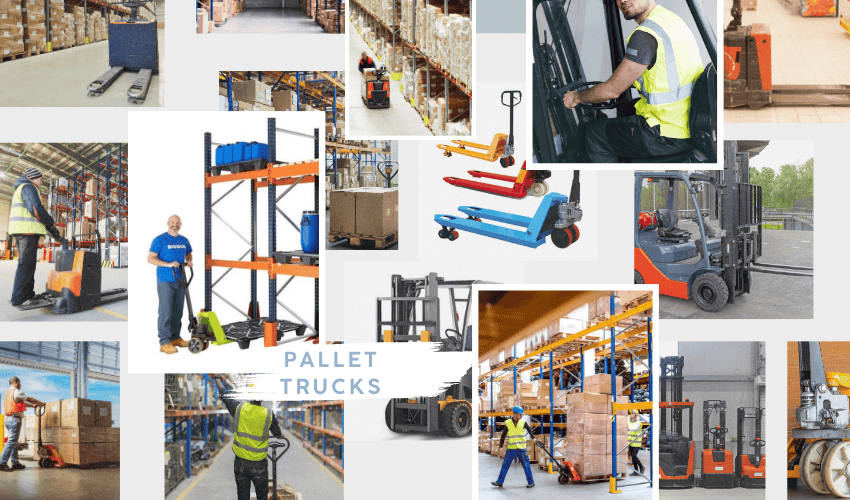
Pallet Truck Series
Evaluating Real‑World Pallet Truck Performance
Here’s where data and real usage examples become invaluable.
A study by Material Handling Institute found that electric trucks can reduce handling time by 20–30% compared to manual trucks in medium‑to‑high volume applications.¹
In a cold storage environment specifically:
-
Battery efficiency dropped dramatically for non‑insulated trucks
-
Manual trucks outperformed AGVs in flexible routing
-
Electric pallet trucks with enhanced power systems showed more than 15% longer uptime in sub‑zero conditions
Those insights reinforce two core truths:
-
Environment matters — not just the truck rating.
-
Operational fit matters more than equipment specs alone.
Practical Selection Guide
To choose the right pallet truck for your warehouse, follow this decision workflow:
Step 1 — Map Operational Zones
Document the main zones of your warehouse:
-
Receiving
-
Storage
-
Cold storage
-
Picking lines
-
Staging & docks
Each has different travel patterns and load behaviors.
Step 2 — Analyze Load Profiles
Collect data on:
-
Average pallet weight
-
Max load encountered
-
Pallet dimensions
This will determine capacity and fork requirements.
Step 3 — Identify Travel Behavior
Measure average distance per shift, peak hours, and forklift interaction zones.
Step 4 — Match to Equipment Capabilities
Compare your data to pallet truck specs. Prioritize:
-
القدرة على المناورة
-
Power efficiency
-
Environmental robustness
-
Maintenance ease
Step 5 — Field Test & Review
Whenever possible, test a candidate truck in your actual warehouse conditions for a few shifts before committing.
Why Akuros Pallet Trucks Are Often a Smart Choice
When warehouses seek a trusted partner rather than a simple hardware vendor, they often find what they need in systems that blend:
-
Performance reliability
-
Operational compatibility
-
Long‑term durability
That’s why Akuros Pallet Truck solutions are designed with warehouse realities in mind — not just rated capacities.
Whether your operation is general storage, cold storage, or mixed environments, the right pallet truck property enhances flow and reduces friction.
And when it’s time to make a solution real, the next practical step is to اتصل بنا to discuss specifics: your dock layout, traffic pattern, load data, and seasonality.
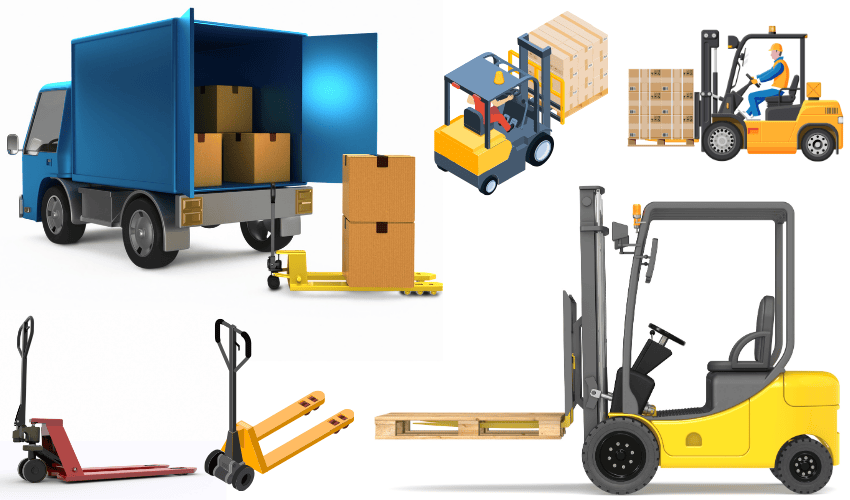
Durable high-quality pallet truck
الأسئلة الشائعة
1. What does “pallet truck” actually refer to?
A pallet truck is a material handling tool used to lift and move palletized loads within a warehouse, dock, or delivery area — manually or electrically powered.
2. Can electric pallet trucks work well in cold storage?
Yes. Electric pallet trucks engineered for cold environments — like the T20B series — maintain performance in low temperatures and resist condensation effects better than generic models.
3. Are pallet trucks better than automated guided vehicles (AGVs)?
In many cases — especially cold storage docks — manual or powered pallet trucks outperform AGVs in flexibility, reliability, and total cost.
4. How do I know if my warehouse needs an electric pallet truck?
If your warehouse has high volume, longer travel distances, heavy loads, or operator fatigue issues, an electric pallet truck can significantly improve efficiency.
5. What maintenance does a pallet truck need?
Regular checks on wheels, hydraulic systems, electrical systems (for electric models), batteries, and safety controls help extend operational life and avoid downtime.
Maximizing Warehouse Efficiency: The Strategic Role of the Right Pallet Truck
Choosing the right pallet truck for your warehouse is more than picking a model number.
It’s about:
-
understanding your warehouse behavior
-
matching load, travel, and environmental conditions
-
thinking beyond peak numbers to real hourly use
-
ensuring operators can handle the equipment safely and efficiently
When you make these choices with real data and operational clarity, the pallet truck stops being merely a tool and becomes a performance enabler.