

 Arabic
  English
  Russian
  French
  Spanish
  German
  Italian
  Portuguese
  Korean
  Japanese
  Turkish
  Indonesian
  Dutch
Dutch 

When Same-Day Promises Collide with Real Warehouse Chaos in Southeast Asia
“Why are we still missing same-day cutoffs in Manila?” the operations lead asked during a Monday stand-up.
“Because inbound, storage, and dispatch are behaving like three separate businesses,” the warehouse manager replied.
“And customers don’t care about our internal excuses,” she said, tapping the heatmap on the screen. “They only see late deliveries.”
That exchange is increasingly common across Southeast Asia. Demand is rising fast, cities are dense, labour markets are tightening, and climate conditions add complexity that many “global template” facilities weren’t built to handle. The practical answer isn’t a bigger building—it’s smarter حلول المستودعات that integrate material handling, energy strategy, data visibility, and process design into one coordinated system.
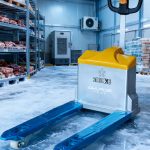
When teams start with the basics—movement, power, and flow—the performance gains often surprise them. A good example is getting the fundamentals of شاحنات المنصات النقالة right, because they quietly shape every minute of dock activity and every metre of congestion. In ASEAN warehouses, pallet moves can be the hidden “tax” on productivity: short cycles repeated thousands of times, amplified by humidity, uneven floors, and peak-hour pressure. Standardising load formats, improving aisle discipline, and matching truck types to pallet profiles can reduce micro-delays that add up to hours—without touching automation budgets. More importantly, it creates a stable baseline for later upgrades like WMS task interleaving and zone-based replenishment.
Power is the next constraint—and in Southeast Asia it’s rarely trivial. Heat, long operating hours, and energy costs make charging strategy an operational issue, not a maintenance footnote. Facilities moving toward electrification often discover that battery performance is a workflow variable: charging windows, battery swaps, and uptime all influence throughput. That’s why planning around بطارية رافعة شوكية capacity, charging safety, ventilation, and shift patterns is part of modern warehouse design. In practice, smarter battery planning supports two goals at once: reliability (fewer interruptions during peak waves) and sustainability (better energy management and lower emissions). If your site runs mixed temperature zones or experiences wet-season surges, aligning charging schedules with demand forecasts can reduce “dead time” while improving safety and compliance.
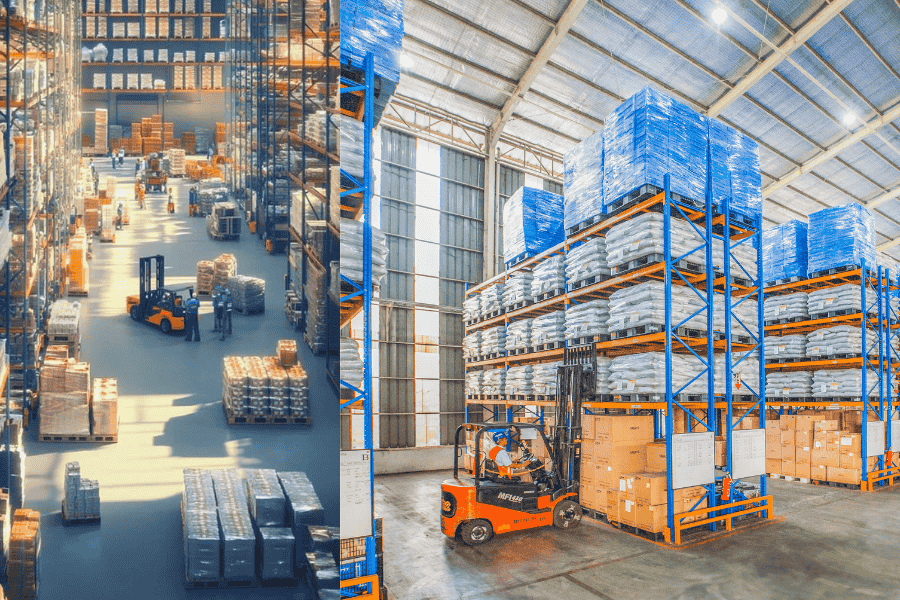 حلول المستودعات الشاملة |
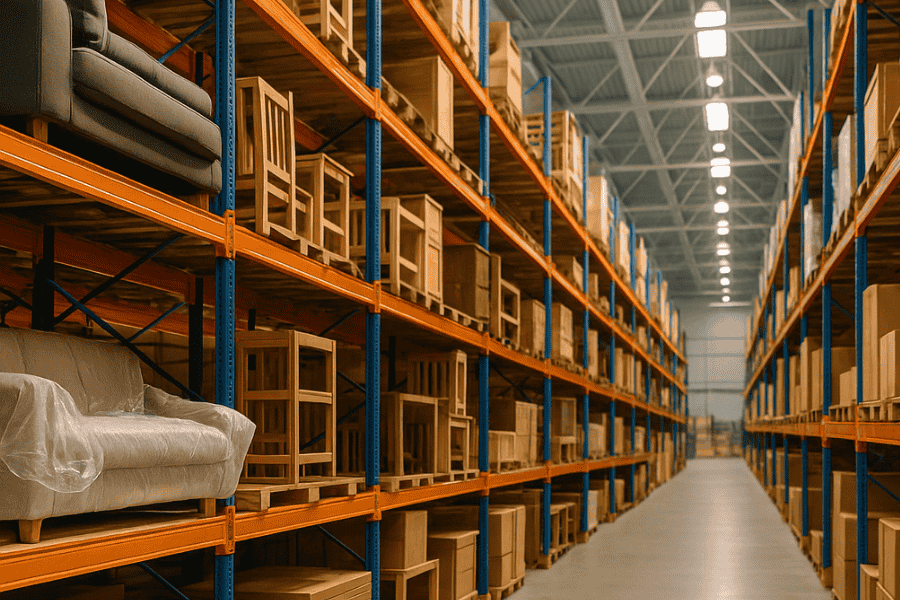 حلول المستودعات الشاملة عالية الجودة |
Why One-Stop Thinking Fits ASEAN Warehousing Reality
Southeast Asia is not one market. Vietnam’s manufacturing growth, Indonesia’s archipelago distribution patterns, Thailand’s cold-chain expansion, and Malaysia’s regional hub role create different warehouse behaviours. Yet across these countries, many companies share one structural problem: fragmented vendors and disconnected systems. One contractor supplies racking, another supplies handling equipment, a third handles software, and a fourth manages maintenance. The result is an operation that functions—mostly—until it hits stress.
That’s where integrated models matter. A well-architected operation treats the warehouse as a single organism: docks, storage, pick paths, power, data, safety, and maintenance are designed to work together. If you want a quick view of where this approach delivers the most impact, look at خدمات المستودعات المتكاملة and how different sectors benefit in different ways. E-commerce cares about velocity and return flows. Food and pharma care about traceability and temperature discipline. Automotive cares about density, accuracy, and predictable line-feeding. The “one-stop” advantage is not a slogan—it’s fewer handoffs, clearer accountability, and a tighter feedback loop from data to action.
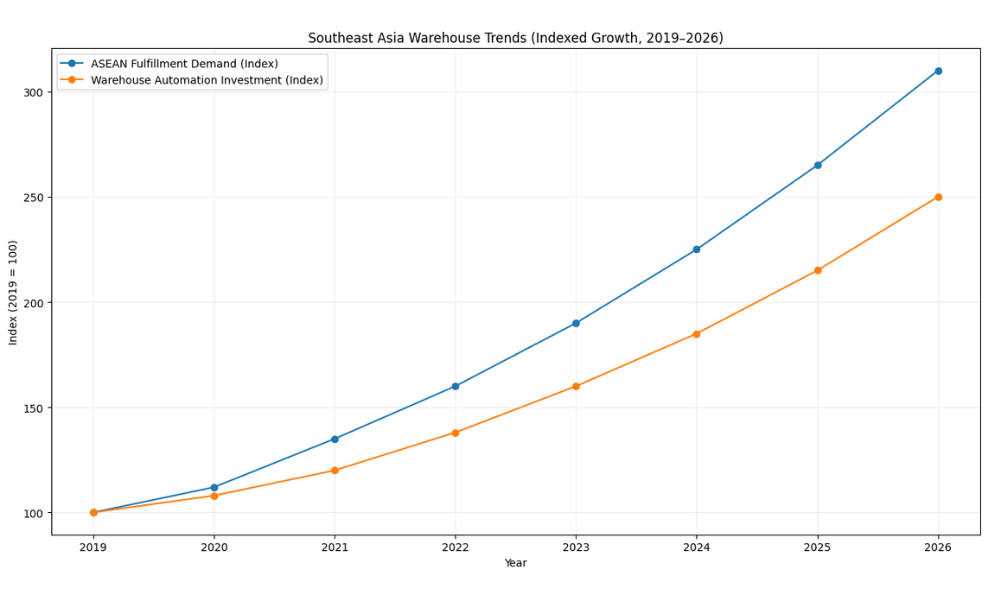
حلول المستودعات
To make this concrete, it helps to compare common ASEAN facility patterns:
| Operating Need | Fragmented Setup Tends to Produce | Integrated Warehouse Solution Tends to Produce |
|---|---|---|
| Peak-season surge control | Ad-hoc labour spikes, dock chaos | Pre-zoned workflows, wave planning, smoother cutoffs |
| Quality & compliance | Manual checks, inconsistent logs | Standard SOPs, traceability, audit-ready reporting |
| Space pressure | More overflow storage | Higher density layouts, disciplined slotting |
| Energy management | Reactive charging & downtime | Planned charging, safer operations, steadier uptime |
When teams apply integrated design, they usually find the same thing: speed increases not only because of equipment, but because decisions become simpler. Roles clarify. Exceptions drop. The warehouse stops “arguing with itself.”
Designing for Climate, Density, and Cross-Border Complexity
Southeast Asia has operational conditions that punish generic layouts. Humidity can affect packaging integrity. Wet seasons stress dock operations. Dense urban footprints limit expansion and force vertical thinking. Cross-border shipping adds documentation and staging requirements that many layouts forget to plan for.
The most resilient حلول المستودعات in the region share three design traits:
-
Climate-aware zoning: Separate handling rules for humidity-sensitive SKUs, controlled areas for regulated goods, and dock processes designed for wet-season realities.
-
Density without fragility: High-density storage that doesn’t collapse under peak traffic—meaning aisle strategy, replenishment lanes, and staging space are engineered as a system.
-
Data-led discipline: Slotting decisions, replenishment triggers, and labour allocation driven by visibility rather than habit.
These are the kinds of system-level principles you see reflected when teams study integrated providers like أكوروس—not as a brand exercise, but as a reference model for how warehouse engineering, operational consulting, and lifecycle support can align under one plan. In practice, this “single plan” approach also makes it easier to scale across countries: your Vietnam site doesn’t become a different universe from your Thailand site; it becomes a localised version of the same operating logic.
What “Smarter” Warehouse Solutions Look Like in Practice
A smarter warehouse is not defined by how many robots it has. It’s defined by how few problems repeat. The best implementations focus on reducing three types of waste: travel, waiting, and rework.
That’s why many teams begin with a structured حلول المستودعات blueprint that starts with measurement and ends with repeatability. In a typical ASEAN rollout, the sequence looks like this:
-
Measure flow: inbound variability, SKU velocity, dock-to-stock time, and pick path density.
-
Rebuild layout logic: slotting by velocity and handling type, with dedicated replenishment lanes and protected staging.
-
Standardise equipment + rules: consistent pallet profiles, traffic rules, safety checks, and charging SOPs.
-
Add selective automation: only where it eliminates a proven constraint (not where it looks impressive).
-
Train and audit: operational habits matter as much as hardware; governance keeps gains from drifting.
Across multiple industry studies and site audits (including regional logistics associations and global supply chain research groups), consistent themes show up: standardised slotting reduces travel; disciplined dock scheduling reduces congestion; and stronger process governance improves accuracy and compliance. In other words, the “science” isn’t mysterious—it’s measurement, feedback loops, and systems thinking applied to daily work.
A useful external signal here is how industry bodies are reacting. Recent ESTA commentary on warehouse modernisation has increasingly emphasised integration, safety discipline, and energy-aware design—not just automation volume. That’s good news for Southeast Asia: it rewards practical engineering over flashy spending, and it supports a more sustainable growth path.
Implementation Checklist for ASEAN Teams
If you’re building or upgrading a warehouse in Southeast Asia, a short checklist helps prevent expensive reroutes later:
-
Confirm the operating promise: next-day coverage, same-day cutoffs, cold-chain integrity, or factory line-feeding.
-
Lock the SKU truth: velocity bands, seasonality, packaging constraints, and compliance needs.
-
Design the dock first: staging, exceptions, wet-season flow, and yard rules.
-
Choose density intentionally: high density is useless if replenishment collapses at peak.
-
Treat energy like capacity: charging plans, ventilation, safety, and uptime targets.
-
Build governance: who owns slotting, who audits safety, who reviews KPIs weekly.
When a team is ready to translate this into a scoped plan, the clean next step is to اتصل بنا with your facility type, country context, throughput goals, and constraints. The fastest projects start with shared clarity: what “better” means, and what must not break during growth.
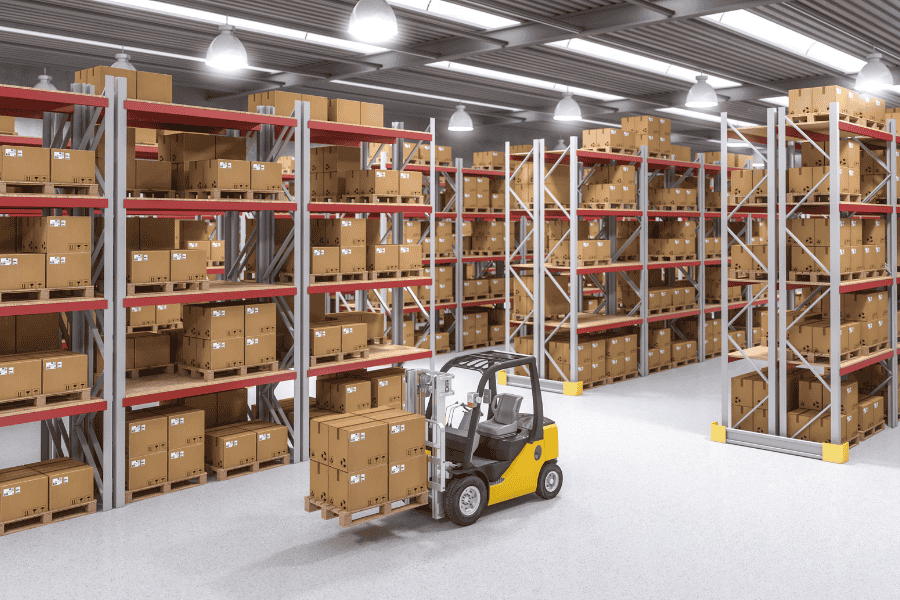
المستودع المتكامل
الأسئلة الشائعة
1) What is the biggest advantage of Warehouse Solutions in Southeast Asia?
The biggest advantage is integration. When storage, material handling, energy planning, and data visibility are designed as one system, throughput improves and recurring bottlenecks drop—especially during peak seasons.
2) Which ASEAN industries benefit most from integrated warehouse design?
E-commerce, cold chain food, pharmaceuticals, and automotive parts typically see the fastest gains because they rely on accuracy, speed, traceability, and compliance under pressure.
3) How do tropical conditions change warehouse design choices?
Humidity, heat, and wet seasons impact docks, packaging, equipment uptime, and safety. Climate-aware zoning, anti-slip dock planning, moisture control, and energy strategy become operational essentials.
4) Should Southeast Asian warehouses prioritise automation first?
Not always. Many sites see bigger returns by fixing layout logic, slotting rules, dock scheduling, and replenishment discipline before adding automation where it removes a proven constraint.
5) What data should teams prepare before starting a warehouse upgrade project?
Prepare baseline KPIs such as dock-to-stock time, pick accuracy, travel time, and order cycle time—plus SKU velocity bands, seasonality patterns, space constraints, and clear service targets.
6) How can a warehouse improve same-day cutoffs without expanding the building?
Improve dock flow, reduce travel distance through better slotting, add staging discipline, standardise pallet profiles, and create a repeatable wave plan. Small process changes often unlock meaningful capacity.
7) What are common mistakes when building Warehouse Solutions for ASEAN markets?
Common mistakes include copying overseas layouts without localisation, underestimating dock congestion, ignoring energy and charging needs, mixing too many picking methods, and treating WMS data as optional rather than foundational.
8) How do Warehouse Solutions support sustainability goals in Southeast Asia?
They support sustainability by reducing unnecessary travel, improving load utilisation, enabling smarter charging and energy management, and cutting rework and spoilage—especially in temperature-sensitive supply chains.
9) What layout features help with high-density urban warehousing in ASEAN cities?
High-density facilities benefit from clear zoning, narrow-aisle discipline, dedicated replenishment lanes, protected staging areas, and one-way traffic rules that prevent forklift conflicts during peak hours.
10) How do integrated Warehouse Solutions reduce labour pressure?
Integration reduces labour pressure by standardising workflows, reducing decision-making friction, improving task allocation through data, and minimising repeated handling—so the same team can move more volume with fewer errors.
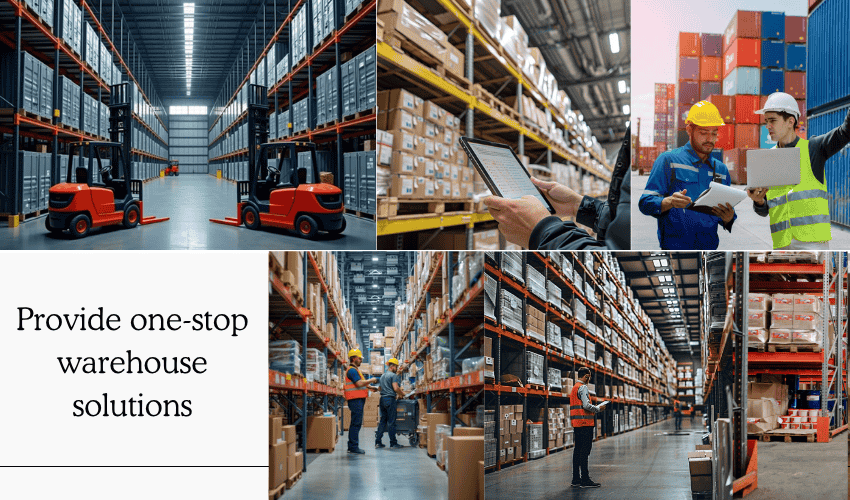
توفير حلول المستودعات الشاملة
A Smarter Warehouse is a Smarter Growth Strategy
Southeast Asia’s logistics boom is real—and so is the risk of scaling chaos. The most durable answer is not copying a global warehouse template, but building حلول المستودعات that respect local climate, urban density, labour realities, and cross-border complexity. When teams treat movement, power, and data as one integrated design problem, warehouses stop being cost centres and start becoming growth engines.
If you want to understand the mindset behind this systems approach—how engineering, operations, and long-term support fit together—the story is best captured in عن أكوروس. The “smarter warehouse” trend isn’t a fad. It’s a practical response to faster markets, higher expectations, and the simple truth that in logistics, small inefficiencies don’t stay small for long.
Southeast Asia doesn’t need “bigger warehouses” as much as it needs better-operating ones. When inbound, storage, and dispatch behave like separate businesses, same-day cutoffs become a gamble. Smarter Warehouse Solutions fix that by aligning layout logic, material flow, energy planning, and data visibility into a single operating rhythm—so peak season stops feeling like controlled chaos.As regional networks expand, the winners will be the operators who standardise the basics first (slotting, dock discipline, replenishment lanes, charging routines) and then automate only where the numbers prove a real constraint. That approach delivers durability: fewer repeated errors, steadier uptime, and smoother scaling across multiple ASEAN countries without rebuilding the playbook every time.
Logistics researcher Dr. Lim Hock-Seng has repeatedly noted in ASEAN supply chain forums that “integration is the real accelerator—technology only works when the warehouse behaves like one system.” In other words, your best upgrade may not be a new machine, but a better system. Build one coordinated warehouse organism, and customers will finally feel the difference where it matters: faster cutoffs, fewer misses, and a supply chain that keeps its promises.